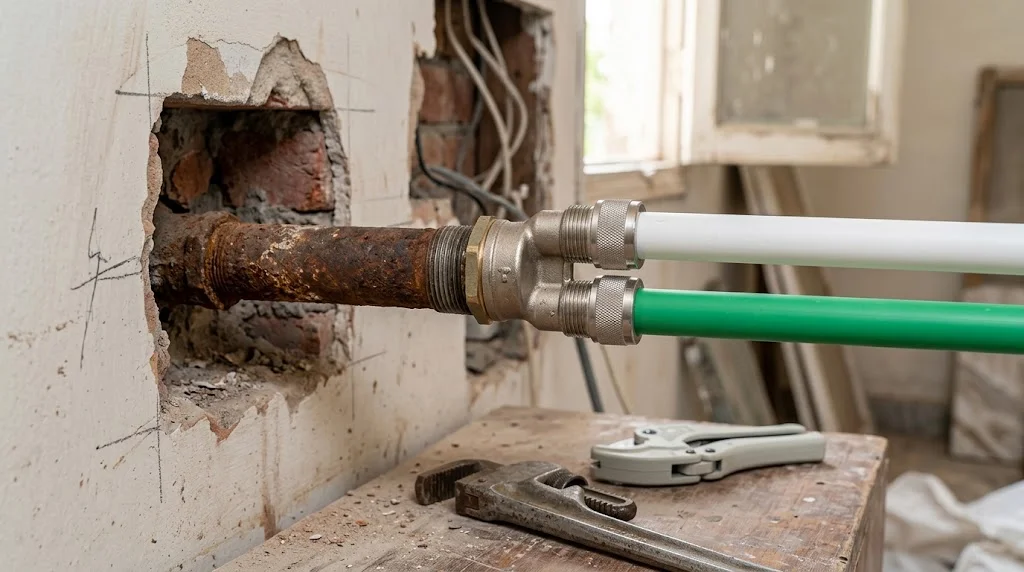
Many older homes and buildings in Pakistan still run on galvanised iron (GI) pipe. Over the years, GI rusts on the inside, scales up, and starts to leak at its threaded joints. If your taps run slowly, the water looks brown, or plumbers keep coming back for repairs, it may be time to convert GI pipe to UPVC or PPRC.
This guide explains when to replace GI pipe, which plastic pipe to choose, how to connect new pipe to old, and how to test the work before you close the walls.
Why Replace Old GI Pipe?
GI pipe is coated with zinc to protect it from rust. That coating wears away over time, and the pipe starts to corrode from the inside. Common warning signs include:
- Brown or rust-coloured water, especially after the water has been off
- Low flow, because rust and scale narrow the inside of the pipe
- Leaks at threaded joints and bends
- Damp patches or stains on walls and ceilings
- Repeated repairs on the same line
UPVC and PPRC do not rust. Their inside surface stays smooth, they are lighter to handle, and their joints are sealed by cement or heat fusion instead of threads.
Old Pipe Replacement Renovation in Pakistan: Where to Start
Begin with a survey. Find where the pipes run, which lines are hot and which are cold, and where the leaks or restrictions are. Decide whether to replace the whole system or only the worst sections.
- Full replacement is best when the whole system is old, or when walls are already open for renovation.
- Partial replacement works when only one bathroom, kitchen, or riser is failing. Connect the new section to the remaining GI with proper adapters.
If you are already breaking walls or floors, replace everything you can reach. It costs far less to do it now than to reopen the wall later.
UPVC or PPRC: Which Should You Choose?
The main question is temperature.
| Pipe | Best use in a renovation | Watch out for |
|---|---|---|
| UPVC | Cold water lines | Not for hot water lines |
| PPRC | Hot and cold water lines | Needs a fusion tool and expansion allowance |
| GI (existing) | Lines you are keeping for now | Rust, scale, and leaking threads |
Use UPVC only for cold water. For hot water, choose PPRC, and confirm its temperature and pressure ratings with the manufacturer. You can see Newtech’s UPVC pipe and fittings and PPRC pipes and fittings for the range.
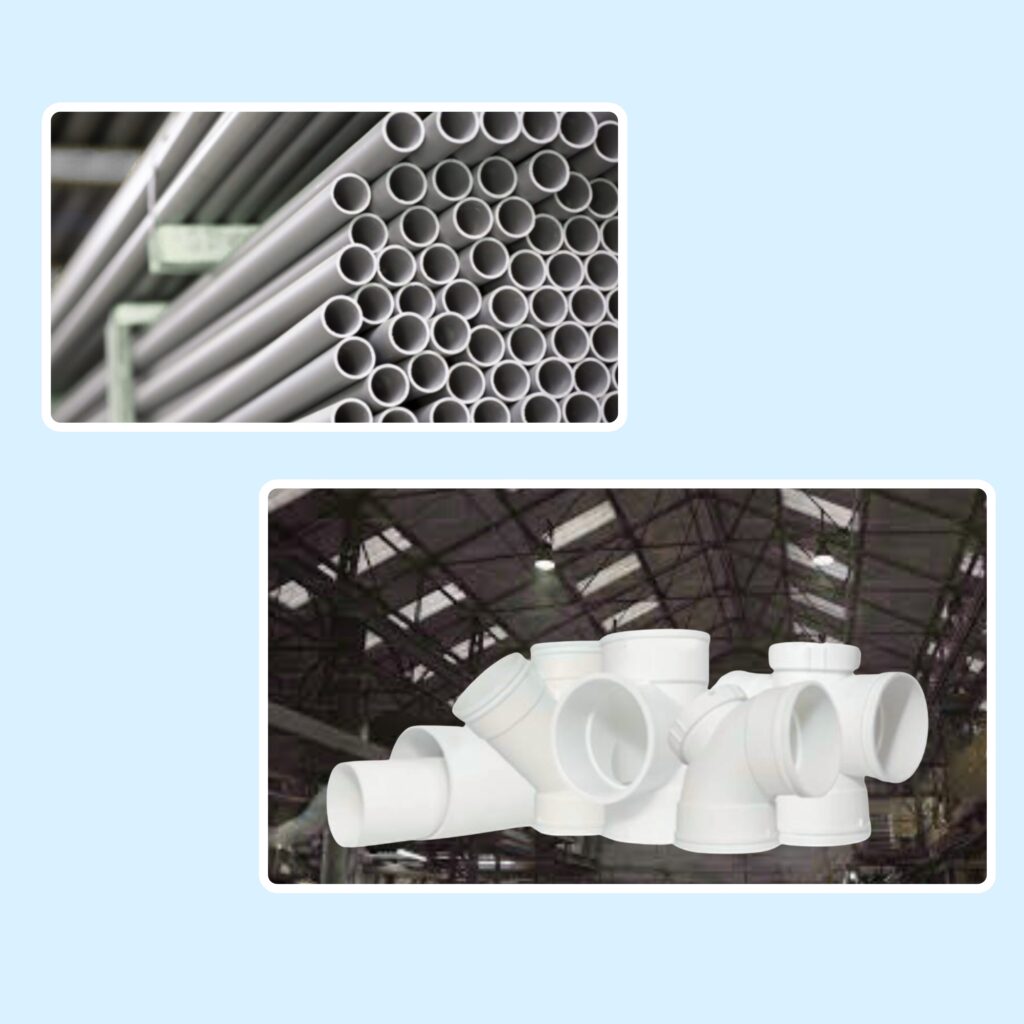
NewTech UPVC Pipe & Fittings
NewTech Pipes · UPVC Piping Systems
Replacing rusted GI on cold water lines? See NewTech UPVC pipes and fittings, which do not rust and join with solvent cement instead of threads.
Pipe Sizes: GI and Plastic Are Not Named the Same Way
GI pipe is named by a nominal size, such as 1/2 inch or 3/4 inch. UPVC and PPRC are usually sized by outside diameter in millimetres. The names do not match one to one, and the inside diameter of plastic pipe changes with its wall thickness.
So do not replace “1/2 inch with 20 mm” by habit. Check the actual inside diameter and the flow each line has to carry. If you are unsure, ask your supplier or designer. Our guide on reading a pipe datasheet shows where to find these dimensions.
How to Convert GI Pipe to UPVC or PPRC, Step by Step
Step 1: Plan and map the system
Draw the existing layout and mark the new route. Decide which lines are hot and which are cold. List every fitting you will need, with a small extra allowance. Our pipe quantity guide for house construction helps with estimating.
Step 2: Shut off and drain the water
Close the main valve and open the taps to drain the lines. Make sure no one uses water during the work.
Step 3: Cut out the old GI pipe
Cut the pipe at planned points with a pipe cutter or hacksaw. Rusted threads may be stuck, so cutting is often easier than unscrewing. Keep a short length of sound GI pipe and thread where you will connect the new pipe.
Step 4: Flush the lines you are keeping
Rust inside remaining GI lines can travel into new pipe. Flush those lines well before you connect anything.
Step 5: Connect the new plastic pipe
For UPVC, clean the pipe and fitting, apply cement, join, and let it cure fully. Our guide on PVC pipe joint leaks covers the common mistakes.
For PPRC, use a heat-fusion tool. Follow the manufacturer’s heating time and temperature exactly, and do not rotate the pipe while joining.
Step 6: Support the pipe
Clip or support the pipe at regular intervals. On hot PPRC lines, leave room for the pipe to expand and contract.
Step 7: Test before closing the wall
Fill the lines with water, pressurise them, and check every joint. Leave the test running long enough to see a pressure drop. Fix leaks now, before tile and plaster go back on.
Connecting New Plastic Pipe to Existing GI Threads
This is the step that causes most problems. Use a proper threaded adapter, not a plastic fitting forced onto a GI thread.
- Identify the thread first. GI threads in Pakistan are commonly BSP, but check. Our guide on BSP vs NPT threads explains how.
- Use an adapter made for plastic-to-metal connections.
- Wrap thread tape in the direction of tightening.
- Do not over-tighten. Plastic fittings crack.
- Support the pipe so the thread does not carry the weight.
Common Mistakes When You Replace GI Pipe
- Using UPVC on a hot water line
- Matching sizes by name instead of by inside diameter
- Forcing plastic onto GI threads
- Skipping the flush on lines you are keeping
- Closing the wall before pressure testing
- Leaving no room for PPRC expansion
- Buying uncertified pipe. Our guide to spotting fake or substandard pipes shows what to check.
Conclusion
To convert GI pipe to UPVC or PPRC well, survey the system, choose the right material for cold or hot water, match pipe sizes by inside diameter, use proper adapters at the GI connection, and pressure test before covering the work. A careful old pipe replacement renovation in Pakistan saves repeat repairs and gives you cleaner water and better flow.
Planning a renovation? Contact Newtech Pipes to discuss pipe and fittings for your project.