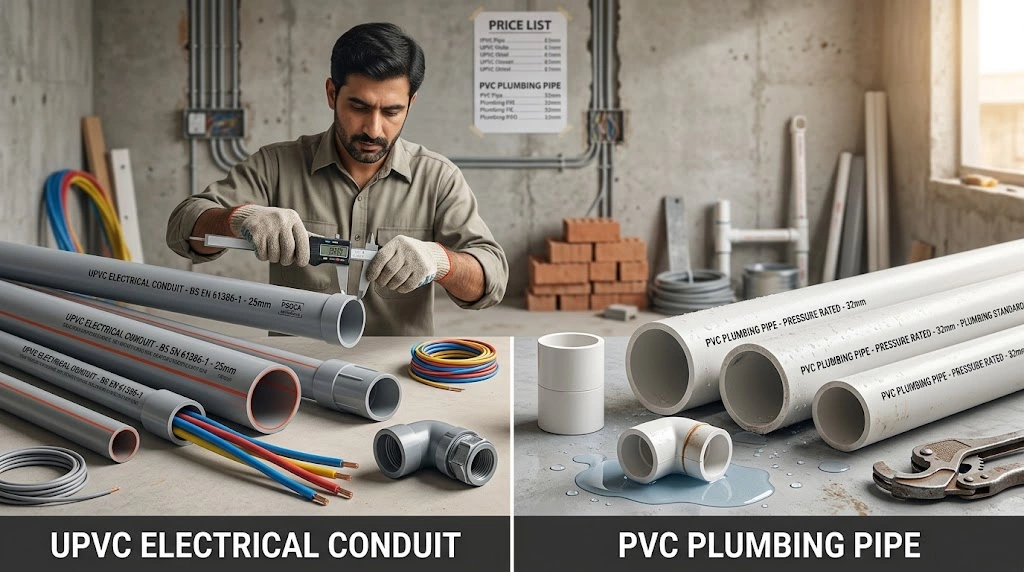
Ask an electrician for “PVC pipe for wiring” or a plumbing supplier for “PVC conduit,” and you could end up with the wrong product on site. Although they may look similar, they are designed for completely different applications. UPVC electrical conduit pipes are specifically manufactured to house and protect electrical wiring, while plumbing-grade PVC pipes are designed to carry pressurized water and are not rated for electrical use. This confusion can lead to serious issues, including wiring being installed in unsuitable pipes, failed electrical inspections, or conduits cracking under conditions they were not designed to withstand. This guide explains the key differences between [UPVC Electrical Conduit Pipes] and general PVC conduit pipes for wiring, helping you choose and specify the right product from the start.
What Is UPVC, and How Is It Different from Standard PVC?
UPVC stands for Unplasticized Polyvinyl Chloride — PVC produced without the plasticizer additives used to make some PVC products flexible. That absence of plasticizer is what gives UPVC its rigidity, dimensional stability, and resistance to deformation under heat, which is exactly what you want in a pipe meant to stay straight and intact inside a wall or concrete slab for decades. Ordinary flexible PVC, by contrast, is engineered to bend, and isn’t the material used for rigid electrical conduit or pressure pipe in the first place. In everyday conversation in Pakistan, “PVC conduit pipe” and “UPVC electrical conduit pipe” often refer to the same rigid product — but knowing the distinction matters when you’re comparing specification sheets or asking a supplier what a pipe is actually made from.
PVC Pipe vs PVC Conduit: Different Products, Same Base Material
The more important distinction — and the one that causes actual site problems — isn’t UPVC versus flexible PVC. It’s pipe versus conduit. Both can be manufactured from PVC-based compounds, but they are designed, tested, and rated for completely different jobs:
- PVC pressure pipe (used for water supply and plumbing) is pressure-tested to carry water under sustained internal pressure, rated by PN class or Schedule.
- PVC/UPVC electrical conduit is not pressure-rated. It’s designed as a protective channel for cables — non-conductive, impact-resistant, and often fire-retardant — but it will not hold up under the water pressure a plumbing pipe is built for.
Using plumbing-grade PVC pipe as a stand-in for electrical conduit, or vice versa, is a common shortcut on smaller sites in Pakistan. It usually works in the short term, which is exactly why it’s risky: the material wasn’t tested or certified for that use, and it can fail an inspection or age differently than a purpose-built conduit would.
Where UPVC Electrical Conduit Pipes Are Actually Used
UPVC electrical conduit pipes are the standard choice for concealed and surface wiring across residential, commercial, and industrial buildings in Pakistan — housing society villas in Lahore, apartment blocks in Karachi, and plaza fit-outs in Islamabad all use some form of PVC conduit pipe for wiring. Typical applications include:
- Concealed wiring cast into concrete slabs and block walls before plastering
- Surface-mounted wiring runs in factories, warehouses, and commercial fit-outs
- Underground cable protection for street lighting, boundary wall lighting, and low-voltage distribution
- Telecom and data cabling, where the conduit protects cable runs from moisture, rodents, and physical damage
Key Technical Differences at a Glance
Property | UPVC Electrical Conduit Pipe | General-Purpose PVC Pipe |
Primary purpose | Housing and protecting electrical cables | Carrying pressurized water or drainage flow |
Pressure rating | Not pressure-rated | Rated by PN class / Schedule |
Electrical property | Non-conductive, insulating | Not manufactured for this property |
Fire behaviour | Often fire-retardant / self-extinguishing grade | Standard PVC compound, not conduit-rated |
Typical fittings | Conduit couplers, bends, junction/inspection boxes | Elbows, tees, solvent or rubber-ring joints |
Sizes and Fittings for PVC Conduit Pipe for Wiring in Pakistan
UPVC electrical conduit is typically supplied from around 20mm upward, with matching couplers, bends, and inspection/junction boxes sized to the same diameter range so a wiring run can be extended or accessed without cutting into finished walls. Matching the conduit size to the number and gauge of cables being pulled through it matters as much as matching the material — an undersized conduit makes cable pulling difficult and increases the risk of insulation damage during installation.
Installation Considerations for Electrical Conduit Pipe
- Concealed work: conduit cast into slabs or chased into block walls should be secured before plastering, with junction boxes positioned for future access — not buried permanently under finished plaster.
- Surface-mounted runs: use conduit clips at consistent intervals to prevent sagging, especially over longer horizontal runs in factories or warehouses.
- Underground runs: conduit used for buried lighting or low-voltage cable should be laid with adequate cover depth and sand bedding, similar in principle to how buried water pipe is protected from surface loads.
- Joint quality: solvent-welded or push-fit conduit joints should be fully seated and, where required, sealed against moisture ingress at underground or exterior locations.
Choosing the Right Conduit for Your Project
Before ordering, confirm three things with your supplier: that the product is genuinely rated as electrical conduit (not repurposed plumbing pipe), that it carries a fire-retardant or self-extinguishing rating if the application calls for it, and that the fittings range matches the conduit diameter you’re specifying. A manufacturer that produces both plumbing-grade PVC pipe and dedicated UPVC electrical conduit pipes under ISO 9001:2015 and PSQCA-compliant production is generally a safer bet than sourcing conduit informally, since the two product lines are tested and marked separately rather than treated as interchangeable
Conclusion
UPVC electrical conduit pipes and general PVC pipe for wiring both start from PVC-based compounds, but they’re manufactured, tested, and rated for different jobs — conduit protects and insulates cable runs, while pressure pipe carries water. Getting this distinction right before ordering avoids failed inspections and rework later. Newtech Pipes manufactures UPVC electrical conduit pipes and fittings alongside its pressure pipe ranges under ISO 9001:2015 and PSQCA-compliant production, giving contractors and electricians a certified option to specify with confidence.
Frequently Asked Questions
It’s not recommended. Plumbing-grade PVC pipe is manufactured and tested for water pressure, not for electrical insulation or fire behaviour, and it typically isn’t rated or marked as conduit. Using it for wiring can fail an electrical inspection and doesn’t carry the same safety assurances as purpose-built conduit.
Quality UPVC electrical conduit pipe is typically manufactured to be fire-retardant or self-extinguishing, meaning it resists sustaining a flame on its own. Always confirm this rating with your supplier rather than assuming — not every PVC-based product on the market carries it.
UPVC electrical conduit is commonly available from around 20mm in diameter upward, with matching bends, couplers, and junction boxes. The right size depends on how many cables need to pass through the conduit and their combined gauge, not just the wall or slab space available.
Buried conduit for lighting or low-voltage cable should still have adequate cover depth and bedding to protect it from surface loads, similar in principle to buried water pipe, though it isn’t subject to the same internal pressure considerations. Local site conditions and cable type should guide exact depth.
PVC pipe is commonly available from around ½ inch, used for electrical conduit and small drainage branches, up to 12 inches for large sewer and stormwater lines. Newtech’s general-purpose PVC range covers 2 to 12 inches, supplied in standard lengths of 3, 4, and 6 metres.