Pakistan’s plastic pipe manufacturing sector has grown well beyond meeting domestic demand for water supply, sewerage, and gas distribution — it now sits at a point where several established manufacturers are technically capable of competing for export orders in nearby regional markets. The Pakistan pipe export industry remains small relative to global players like China, but the raw ingredients for growth are in place: local production capacity, ISO-certified quality systems, and proximity to price-sensitive markets in the Middle East, Africa, and Central Asia. This article looks at where the real opportunities and obstacles lie for HDPE PVC pipe exporters Pakistan-based manufacturers are trying to become, and what it actually takes to compete for an international order rather than just a domestic one.
The Current State of Pakistan’s Pipe Export Industry
Pakistan’s plastic pipe manufacturing base is overwhelmingly focused on the domestic market — water supply, sewerage, agriculture, and gas distribution projects consume most of what local factories produce. Export activity exists, but it’s fragmented: a handful of manufacturers ship containers to Afghanistan, Central Asian republics, and parts of the Middle East, often through trading intermediaries rather than direct export relationships. This is a very different position from China, which dominates global HDPE and PVC pipe exports through massive production scale, established international certifications, and direct sales offices in target markets. For Pakistani manufacturers, the opportunity isn’t to compete head-on with that scale, but to compete on regional proximity, freight cost advantages to nearby markets, and increasingly rigorous quality certification that can match what international buyers expect.Which Markets Are Realistic for Pakistani HDPE and PVC Pipe
Geography and existing trade relationships point to a few realistic near-term markets rather than a scattershot global push:| Region | Why It’s Realistic | What Buyers Typically Want |
| Afghanistan & Central Asia | Land border/rail proximity keeps freight cost low compared to seaborne competitors | Water supply and irrigation-grade HDPE and PVC pipe, moderate certification requirements |
| Middle East (UAE, Gulf states) | Established trade corridors, demand from infrastructure and construction projects | PE100 HDPE for water/gas networks, often requiring third-party lab certification |
| East & Sub-Saharan Africa | Growing infrastructure investment, price sensitivity favors non-Chinese alternatives | Affordable water and irrigation pipe, less stringent certification but strong price competition |
Certifications and Standards International Buyers Expect
Domestic Pakistani buyers generally accept PSQCA registration and ISO 9001:2015 quality management certification as sufficient proof of a manufacturer’s credibility. International buyers, particularly in the Middle East and parts of Africa, often expect additional product-specific certifications — such as third-party material test reports referencing international standards (ISO 4427 for PE pipe, ISO 1452 for PVC-U, or regional equivalents), and in some cases certification bodies like SASO (Saudi Arabia) or similar national conformity marks. A manufacturer already operating under ISO 9001:2015 quality management and PSQCA product registration has a real head start, since much of the documentation discipline required for export certification — batch traceability, material test records, consistent quality control — is already part of that system, even if the specific export certificate itself still needs to be obtained separately.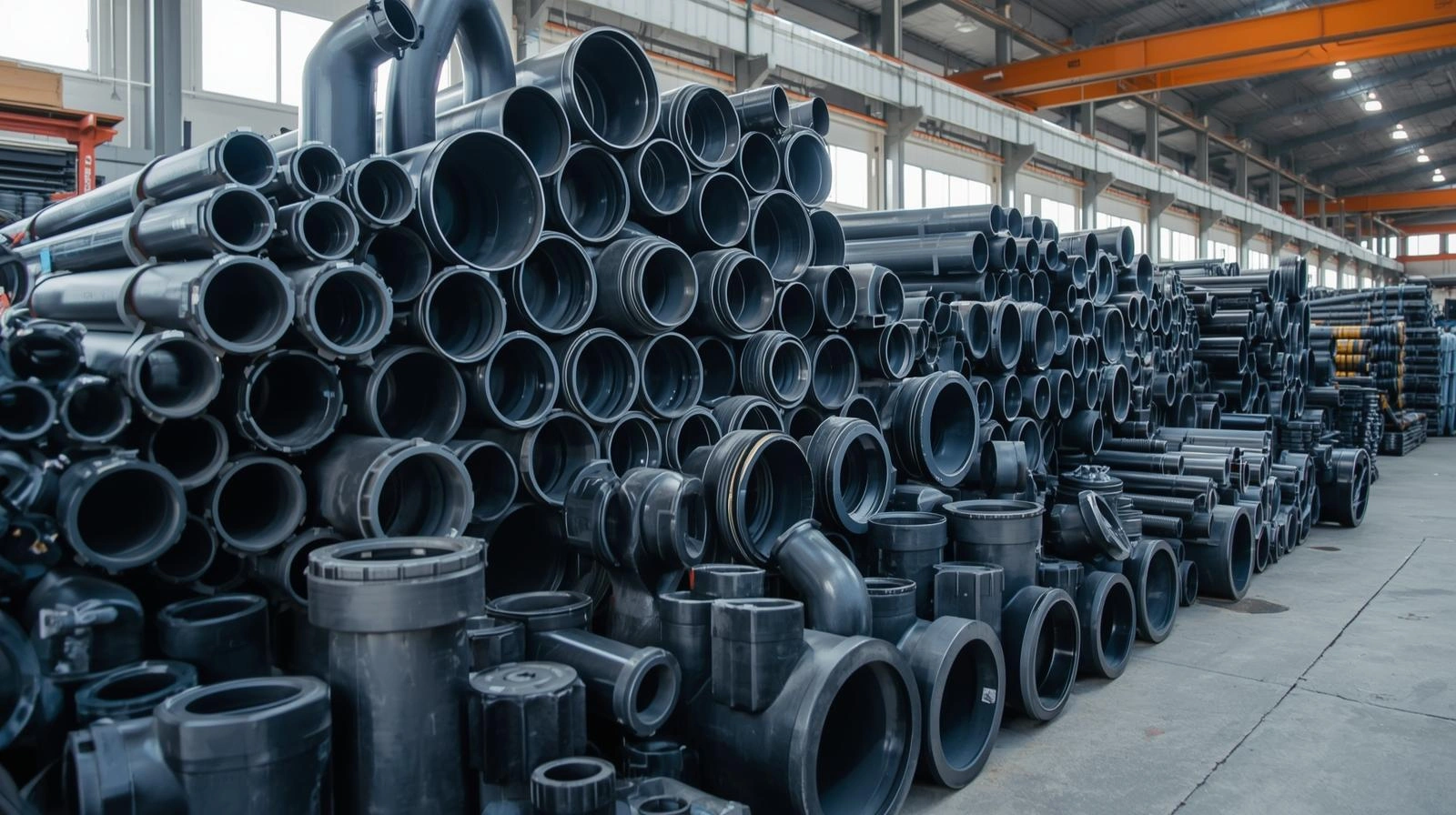
HDPE Pipes & Fittings
NewTech Pipes · HDPE Piping Systems
Export buyers look closely at material and standards. Review NewTech HDPE: PE-100 raw material, ISO 4427, PN ratings and SDR.
View ProductAdvantages Pakistani Manufacturers Bring to Global Buyers
- Lower labor and overhead costs relative to Gulf-based or European manufacturers, translating into competitive pricing for price-sensitive markets
- Geographic proximity to Afghanistan, Central Asia, and parts of the Middle East, reducing freight time and cost versus shipments from China or Europe
- Growing domestic manufacturing experience with HDPE, PVC, and PPRC across water supply, sewerage, and gas distribution — the same product categories most in demand regionally
- Existing familiarity with international resin suppliers, since most Pakistani manufacturers already import virgin HDPE and PVC compound rather than relying on unverified local resin
Common Challenges in Competing for Export Orders
- Currency volatility makes it difficult to quote firm export prices in advance, particularly for orders with long lead times
- Freight and logistics costs to seaborne markets can erode price advantages that exist on paper, especially for bulky, low-value-per-kg products like pipe
- Scale disadvantage against Chinese manufacturers, who can offer both lower unit prices and established international certification at volumes Pakistani factories can’t yet match
- Limited direct sales presence in target markets means most Pakistani exporters rely on trading intermediaries, which compresses margins and reduces control over customer relationships
What It Takes for a Local Manufacturer to Become Export-Ready
Moving from domestic supplier to credible exporter isn’t a marketing decision — it requires specific operational changes:- Obtain product-specific export certifications relevant to the target market (e.g., SASO for Saudi Arabia, or CE marking for certain European specifications), in addition to existing ISO 9001:2015 and PSQCA registration
- Establish consistent batch-level test documentation that can be shared with international buyers as proof of quality, not just as an internal quality control record
- Build export-compliant packaging and labeling that meets the destination country’s customs and product marking requirements
- Develop a direct sales or agent relationship in at least one target market rather than relying solely on inbound trading inquiries
- Price test orders realistically, factoring in freight and currency risk rather than quoting domestic-market pricing with a simple markup
HDPE vs PVC: Which Has Stronger Export Demand
Between the two, HDPE generally has stronger regional export demand, largely because PE100 pipe is used extensively in both water supply and gas distribution networks across the Middle East and Central Asia, and its coil form reduces shipping complexity for smaller diameters. PVC and UPVC pipe exports tend to be more price-competitive and commoditized, facing stronger pressure from established regional suppliers already serving those markets at scale. For a Pakistani manufacturer evaluating where to focus export efforts first, HDPE — particularly in water supply and irrigation grades — presents a more realistic entry point than trying to compete immediately in the more crowded PVC export space.
What International Buyers Should Check When Sourcing Pipes from Pakistan
For importers and project contractors, Pakistan can be a cost-competitive source of HDPE and PVC pipe, but only if the supplier can back up quality with documentation. Before placing an order, check the following:
- Product standards and test reports: Ask for third-party or in-house laboratory test reports referencing the relevant standard, such as ISO 4427 for PE pipe or ISO 1452 for PVC-U. See how our laboratory tests each batch.
- Material grade and resin source: Confirm the pipe grade (for example PE100) and that virgin resin is used, not reprocessed material.
- Batch traceability: Each production batch should be traceable to its material and test records.
- Certifications: Confirm ISO 9001:2015 and PSQCA registration, and ask what additional certification your destination market requires. Learn more about our quality control.
- Packaging and labeling: Pipe markings, coil or length packaging, and documentation should meet your country’s customs and project requirements.
- Lead time, freight terms, and minimum order quantities: Agree these in advance, including the shipping terms (Incoterms) and payment method.
- Samples: Request samples or test certificates before a full container order.
Planning an import or a project order? Browse our product catalogue or request a quote with your required pipe type, diameter range, pressure rating, and destination, and our team will respond with specifications and documentation.
PVC Pipes & Fittings
NewTech Pipes · PVC Piping Systems
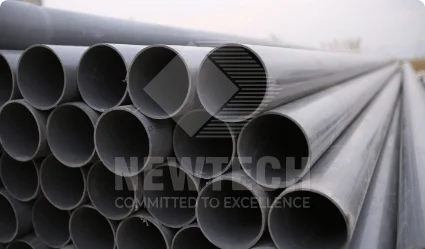
Looking at PVC for your own range or project? Browse NewTech PVC pipes and fittings for plumbing and drainage.
View Product