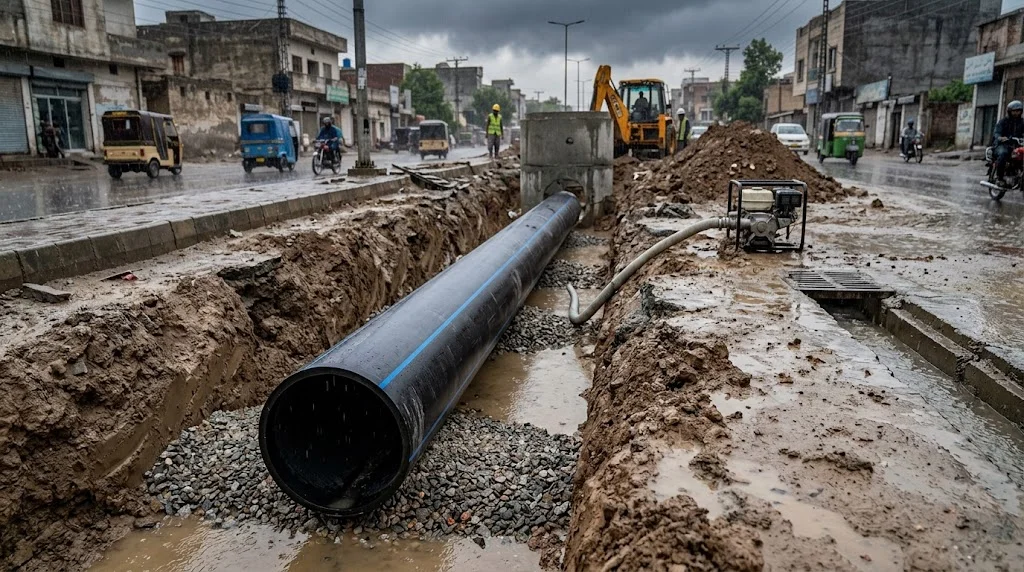
Every monsoon, the same pictures appear: flooded streets, overflowing manholes, and water standing in lanes for days. When people look for a monsoon drainage pipe Pakistan can rely on, they are often asking two questions. Why do underground drains fail in heavy rain, and what can be done about it?
The honest answer is that pipe material is only one part of the story. Capacity, installation quality, joints, and maintenance matter just as much. This guide explains what monsoon rain does to underground drainage pipes and which design and installation choices help.
How Do Monsoon Rains Affect Underground Drainage Pipes?
Heavy rain hits a drainage system in several ways at once.
1. Flow beyond design capacity
A drain is designed for a certain peak flow. When rainfall is heavier than the design assumed, the pipe fills completely and water backs up. This is a common cause of underground drainage flooding. Water can push up through manholes and gullies and spill onto the street.
2. Saturated soil and loss of support
Buried plastic pipes depend on the soil around them for support. When the ground becomes soaked and soft, it gives less side support. The pipe can deflect (squash slightly), and the bedding can wash out or settle.
3. Groundwater and joint leaks
A high water table pushes groundwater against the pipe. If the joints are weak, water seeps in. This extra flow adds to the load on the system and can carry soil into the pipe.
4. Silt, sand, and debris
Heavy rain washes sand, silt, and rubbish into drains. In flat lines, this material settles and narrows the pipe. A partly blocked pipe has less capacity exactly when you need the most.
5. Flotation during construction
An empty pipe in a flooded trench can float, because plastic pipe is lighter than water. This is a real risk for projects that continue through the rainy season.
Why Underground Drainage Flooding Is Not Only a Pipe Problem
Pipes cannot fix every flooding problem. Cities such as Karachi, Lahore, and Rawalpindi regularly face urban flooding in heavy monsoon spells. Common causes include:
- Drains sized for lighter rainfall than today’s storms
- Blocked culverts, outfalls, and open drains
- Encroachment and poorly planned development along drainage paths
- Silt and rubbish that are not cleared before the season
- Sewerage and stormwater lines overloaded at the same time
A well-chosen, well-installed pipe helps with the pipe-related causes. It does not replace proper planning, outfalls, and maintenance. Any project needs a design by a qualified engineer using local rainfall data.
Choosing Drainage Pipe for Monsoon Conditions
Plastic pipe suits underground drainage for several reasons:
- It does not rust or rot in wet ground.
- It has a smooth inner surface that helps water flow.
- It is lighter than concrete, which makes handling easier.
- Joints can be made tight, which limits groundwater entry.
Here is how the main materials compare:
| Pipe | Joint type | Good for |
|---|---|---|
| HDPE | Butt fusion or electrofusion | Long runs, uneven ground, leak-tight lines |
| UPVC | Rubber ring or solvent cement | Gravity drains and building drainage |
For gravity drains, ask the supplier for the pipe’s ring stiffness class or SDR, whichever applies to the product. This tells you how well the pipe resists soil and traffic loads. Confirm the correct class for your depth and soil with your designer.
You can browse Newtech’s HDPE pipes and fittings and UPVC pipe and fittings for details.
NewTech HDPE Pipes & Fittings
NewTech Pipes · HDPE Piping Systems
Planning an underground drain? See NewTech HDPE pipes, listed for sewerage, drainage and stormwater systems, with leak-resistant fused joints.
View ProductInstalling Underground Drainage Pipes Before and During Monsoon
Good installation is what separates a drain that survives the rains from one that fails.
- Dewater the trench. Do not lay pipe in standing water. Pump the trench dry and keep it dry.
- Prepare good bedding. Use compacted, suitable bedding so the pipe has even support along its length.
- Compact the side fill. Side support is what holds a flexible pipe in shape.
- Prevent flotation. Backfill quickly after laying and testing, and secure empty pipes against floating.
- Cap open ends. Keep silt and debris out of the line during construction.
- Test before backfilling. Check every joint. Leaks found now cost far less than leaks found after the road is rebuilt.
Our guide on PVC pipe joint leaks explains the most common jointing mistakes. For HDPE lines, see our HDPE butt-fusion welding machines used for leak-tight fused joints.
Pre-Monsoon Checklist for Drainage Lines
| Task | Why it matters |
|---|---|
| Desilt manholes, gullies, and open drains | Restores capacity before heavy rain |
| Inspect joints and chambers | Finds leaks and cracks early |
| Clear outfalls and culverts | Water needs a way out |
| Check covers and gratings | Prevents overflow and accidents |
| Review low-lying lines | Pinpoints where flooding starts |
| Plan repairs before the rains | Avoids digging in wet ground |
Common Mistakes With Monsoon Drainage
- Sizing drains for average rainfall instead of peak storms
- Laying pipe in a flooded trench
- Skipping bedding and side compaction
- Forgetting to cap pipe ends
- Using weak or poorly made joints
- Not desilting before the season
- Assuming a bigger pipe alone will solve flooding
Conclusion
A reliable monsoon drainage pipe Pakistan projects can depend on starts with the right design, the right pipe, and careful installation. Plan for peak flow, protect the pipe with good bedding and tight joints, test before backfilling, and clear silt before the rains arrive.
Planning a drainage project? Contact Newtech Pipes to discuss pipe options for your site.