Every contractor, developer, and homeowner looking for pipes in Pakistan eventually asks the same question: which is the best pipe brand in Pakistan? The truth is that there is no single brand that is the right choice for every application. Underground water supply systems, industrial process piping, and agricultural irrigation projects all require different materials, pressure ratings, and installation methods. Instead of relying only on a brand name, it is more important to evaluate whether the manufacturer can demonstrate that its pipes meet the standards and technical requirements of your project. This guide explains the key certifications, specifications, and supplier questions you should consider when comparing pipe manufacturers, helping you make a decision based on reliable facts rather than assumptions.
Why “Best” Depends on the Application, Not Just the Brand
Before comparing manufacturers, it helps to be clear about what the pipe is actually going to do. A water supply main buried under a Lahore housing society, a hot-water plumbing riser inside a Karachi apartment block, and a drip irrigation line on a Multan farm are not interchangeable use cases, even though all three might get lumped together as “pipes” in a quick online search.
High Density Polyethylene (HDPE) pipe is generally the first choice for buried water mains, gas distribution, and irrigation, because it flexes rather than cracks when the ground shifts. Polypropylene Random Copolymer (PPRC) is built for hot and cold water plumbing inside a building, where consistent temperature resistance matters more than flexibility. Unplasticized PVC (UPVC) is common for drainage, sewerage, and electrical conduit, where the pipe runs at low pressure and needs to resist chemical exposure rather than ground movement. Medium Density Polyethylene (MDPE) sits between HDPE and UPVC and is widely used for buried gas and water distribution networks in cities such as Faisalabad and Gujranwala. A manufacturer that only makes one of these materials well isn’t automatically wrong for your project — but it does mean the “best brand” question only makes sense once you know which category you’re actually shopping in.
What Actually Separates a Reliable Manufacturer From an Average One
Once you know the material you need, the real differentiator between manufacturers isn’t marketing — it’s process control. Three things consistently separate the top pipe manufacturers in Pakistan from the rest of the market:
- Raw material sourcing: pipes extruded from virgin PE100 or PP-R resin hold their pressure rating far more reliably over 20+ years than pipes made partly from reprocessed or regrind plastic, which is cheaper but weakens wall strength unevenly.
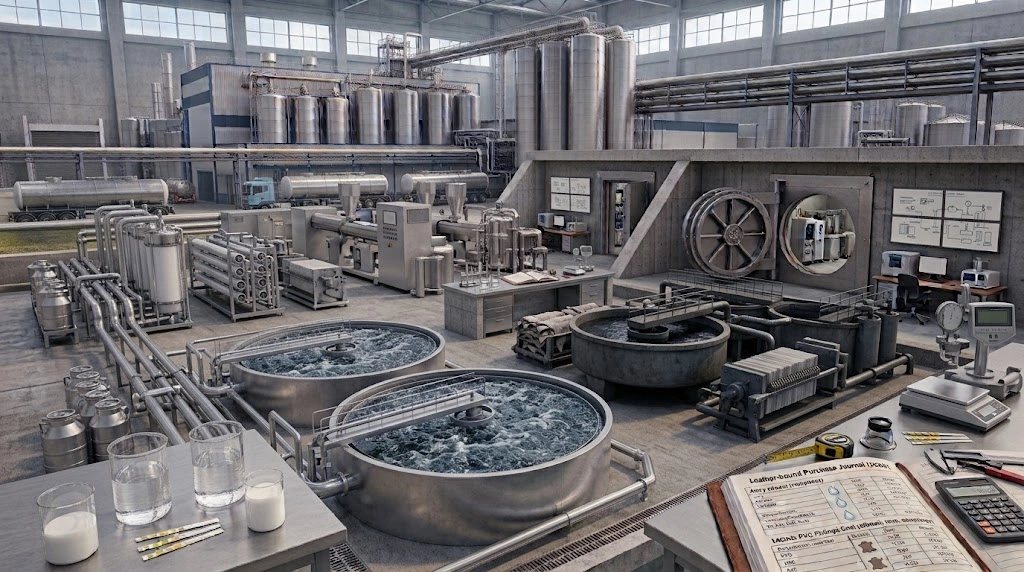
- In-house testing: reputable manufacturers pressure-test, impact-test, and check wall thickness on production batches in an accredited lab, not just at the design stage.
- Process consistency: extrusion temperature, cooling rate, and wall-thickness tolerance need to stay consistent across a production run — inconsistent pipe wall thickness is one of the most common causes of premature failure at joints.
None of this is visible by looking at a pipe on a dealer’s shelf, which is exactly why the certifications covered further down matter more than packaging or price alone.
HDPE vs UPVC vs PPRC vs MDPE: Matching Material to Project
The table below summarizes where each material typically fits, to help you narrow the field before comparing specific suppliers.
Material | Typical Use | Pressure Handling | Joining Method |
HDPE | Water supply mains, irrigation, buried gas lines | High; handles ground movement well | Butt-fusion or electrofusion welding |
UPVC | Drainage, sewerage, electrical conduit | Low to moderate, rigid pipe | Solvent cement or rubber-ring socket |
PPRC | Hot & cold water plumbing inside buildings | Moderate to high, heat-stable | Heat (socket) fusion welding |
MDPE | Buried gas and water distribution networks | Moderate to high, flexible | Electrofusion or compression fittings |
Understanding Pressure Ratings and Pipe Classes
A pipe’s PN rating (Pressure Nominal) tells you the continuous working pressure, in bar, that the pipe is designed to withstand at a reference temperature. Buyers often compare price per meter without checking whether the PN class actually matches the job — a mistake that only shows up after installation, when the line is buried and expensive to dig up.
PN Class | Typical Working Pressure | Common Application |
PN10 | 10 bar | Low-rise residential water supply |
PN16 | 16 bar | Standard supply mains, mid-rise buildings |
PN20 | 20 bar | Higher-pressure commercial and industrial lines |
PN25 | 25 bar | Hot water and industrial process piping |
The PN rating on its own isn’t enough to verify quality — ask for the pipe’s SDR (Standard Dimension Ratio) and wall thickness as well. A pipe marked PN16 but produced with thinner-than-specified walls will not perform like a genuine PN16 pipe under sustained pressure. On a properly PSQCA-compliant pipe, the PN and SDR markings should be printed continuously along the pipe wall, along with the manufacturer’s name and production batch — check for this before accepting delivery.
Certifications Worth Checking Before You Buy
This is the step most buyers skip, and it’s the fastest way to separate genuinely reliable suppliers from the rest of the market when researching top pipe manufacturers in Pakistan:
- ISO 9001:2015 certification — confirms the manufacturer runs a documented quality management system, not just a one-off good batch.
- Pakistan Standards and Quality Control Authority (PSQCA) registration — required for many categories of plastic pipe sold in Pakistan, and the licence number should be verifiable, not just claimed.
- Pakistan Engineering Council (PEC) recognition — relevant when the supplier is working with consultants or contractors on PEC-regulated projects, such as municipal or industrial infrastructure.
Ask any shortlisted supplier for their certificate numbers, not just a logo on their brochure or website, and cross-check that the certificates are current rather than expired.
Five Questions to Ask Any Pipe Manufacturer Before You Order
- Can you show recent lab test reports for this specific pipe size and batch, not just a generic data sheet?
- Is the resin virgin material, or does it include reprocessed or regrind plastic?
- What does the warranty actually cover, and for how long?
- Do you provide technical support on-site for installation, such as supervising butt-fusion welding?
- Can you supply consistently at the volume and timeline my project needs, without substituting batches mid-project?
Why the Cheapest Pipe Is Rarely the Best Value
It’s tempting to treat pipe as a commodity and buy on price per meter alone. In practice, the cost difference between a properly specified pipe and a thinner-walled or reprocessed-resin alternative is usually a small fraction of a project’s total cost — but the cost of a failure is not. A burst joint on a buried supply line inside a completed housing society, for example, can mean breaking through finished paving or landscaping to excavate and repair a single section, a cost that can run many times higher than what was saved on the original pipe purchase. Treating pipe selection as a durability decision, not just a procurement line item, is usually the cheaper choice over the life of the project.
How Newtech Pipes Measures Up
Newtech Pipes has been manufacturing HDPE, UPVC, PPRC, and MDPE pipes and fittings in Pakistan since 2000, and holds ISO 9001:2015 certification alongside PSQCA registration and Pakistan Engineering Council recognition. The company’s HDPE range spans 20mm to 630mm, with fittings from 63mm to 630mm, produced under an in-house quality control and testing process. For contractors and buyers running through the checklist above, Newtech is one option worth including in that comparison.
Conclusion
There isn’t one universal “best pipe brand in Pakistan” — there’s the brand that can prove, with certificates and test reports, that its pipes match what your specific project needs. Before placing an order, confirm the material fits the application, check the PN class against real pressure requirements, and verify ISO 9001, PSQCA, and PEC credentials directly rather than taking them on faith. Newtech Pipes, manufacturing certified HDPE, UPVC, PPRC, and MDPE pipes in Pakistan since 2000, is one certified, experienced option to include when you run through that checklist.
Frequently Asked Questions
Ask the manufacturer for their PSQCA licence number and product category, then verify it rather than relying on a logo alone. A genuine licence is tied to specific pipe types and sizes, so a certificate for one product category doesn’t automatically cover every pipe the company sells.
The number after “PN” is the pipe’s rated continuous working pressure in bar. A PN20 pipe is built to withstand higher sustained pressure than a PN16 pipe, usually through a thicker wall at the same outer diameter, making it suited to higher-pressure commercial or industrial lines rather than standard low-rise supply.
Not necessarily — price alone doesn’t confirm quality. What matters is verifiable evidence: current ISO and PSQCA certification, accessible lab test reports, and correct wall thickness for the stated PN class. A mid-priced, properly certified pipe is a better choice than an expensive one without documentation to back it up.
HDPE is generally preferred for buried water supply mains because it flexes with ground movement instead of cracking, resists corrosion, and can be joined with leak-resistant butt-fusion welds. The right PN class still depends on your project’s pressure requirements and pipe diameter.