Pakistan’s construction and infrastructure sector is expanding steadily, creating increasing demand for HDPE, PVC, PPRC, and MDPE pipes—from housing developments in Lahore to gas utility projects in Faisalabad. For hardware retailers, builders’ merchants, and established plumbing suppliers, this growth offers a valuable opportunity to become a trusted Pipe Dealer in Pakistan, providing businesses with quality products and a reliable supply through either a distributorship or dealership.
.However, not every dealership opportunity is worth pursuing. Profit margins, business support, and product quality can vary significantly from one manufacturer to another. If you’re considering becoming a NewTech dealer or comparing pipe distributorship Pakistan opportunities in general, this article explains what a manufacturer dealership typically involves, what NewTech looks for in a potential partner, and the key questions you should ask before signing an agreement.
What It Means to Be a Pipe Dealer vs. a Distributor
The terms “dealer” and “distributor” get used loosely in Pakistan’s building materials trade, but they usually describe different points in the supply chain.
- A distributor typically buys larger volumes directly from the manufacturer, holds stock across a wider territory (a city or region), and may supply smaller dealers or retailers in turn.
- A dealer usually operates a single retail or trade counter, buys from the manufacturer or a regional distributor, and sells directly to contractors, plumbers, housing societies, and individual buyers.
Both roles carry the manufacturer’s name and are expected to represent product quality accurately. That’s why manufacturers screen applicants rather than opening sales to anyone with a shop — a dealer selling substandard advice or mishandled stock damages the brand as much as a bad batch of pipe would.
For someone entering this market for the first time, the practical difference matters most in three places: how much capital you tie up in stock, how wide a customer base you’re expected to cover, and how much technical support you can lean on before you’re confident enough to advise buyers yourself. A dealer running a single trade counter in Multan will typically stock a narrower range — the sizes and grades that move fastest in that local market — while a regional distributor may need to hold the full HDPE, PVC, PPRC, and MDPE range across multiple diameters to serve dealers under them. Understanding which role fits your current business, storage capacity, and customer relationships is the first decision to make before approaching any manufacturer.
Why Pipe Distributorship Is Worth Considering in Pakistan
Pakistan’s piping demand isn’t limited to new construction. Aging municipal water networks, ongoing gas utility expansion by SNGPL, agricultural tube-well installation in Punjab and Sindh, and the steady pace of housing development in DHA and Bahria Town schemes all create recurring, non-seasonal demand for pipe and fittings. Unlike some construction materials, pipe is a repeat-purchase category — projects need multiple diameters, fittings, and accessories over months, not a single order.
For a hardware retailer or plumbing supplier, adding an authorized pipe line means:
- A product category with steady year-round movement, not just a construction-season spike
- The ability to bundle pipe sales with fittings, welding equipment, and related plumbing hardware
- Brand credibility that helps win larger institutional and housing-society orders, where buyers specifically ask for ISO-certified, PSQCA-approved material
There’s also a structural shift working in dealers’ favor. As more WASA-supervised, PEC-supervised, and housing-society projects formalize their procurement — requiring PSQCA certification and batch test certificates before material is even allowed on site — informal, uncertified supply is gradually being pushed out. Buyers who once bought pipe from whichever shop was nearest are increasingly asking specifically for an authorized pipe supplier network they can hold accountable if a batch underperforms. That shift favors dealers who can show a documented relationship with a certified manufacturer, rather than those simply reselling whatever stock is cheapest that week.
What NewTech Looks for in a Dealer
NewTech Industries has manufactured HDPE, PVC, PPRC, MDPE, and electrical conduit pipe since 2000 and holds ISO 9001:2015 certification, so the company is selective about who represents that name in the market. While exact commercial terms are worked out directly with NewTech’s sales team (and will vary by city and product category), the general criteria a manufacturer in this position typically evaluates include:
- An established retail or trade presence. A functioning shop, godown, or trade counter in a relevant market — Islamabad, Lahore, Multan, Quetta, or another city with active construction and utility demand.
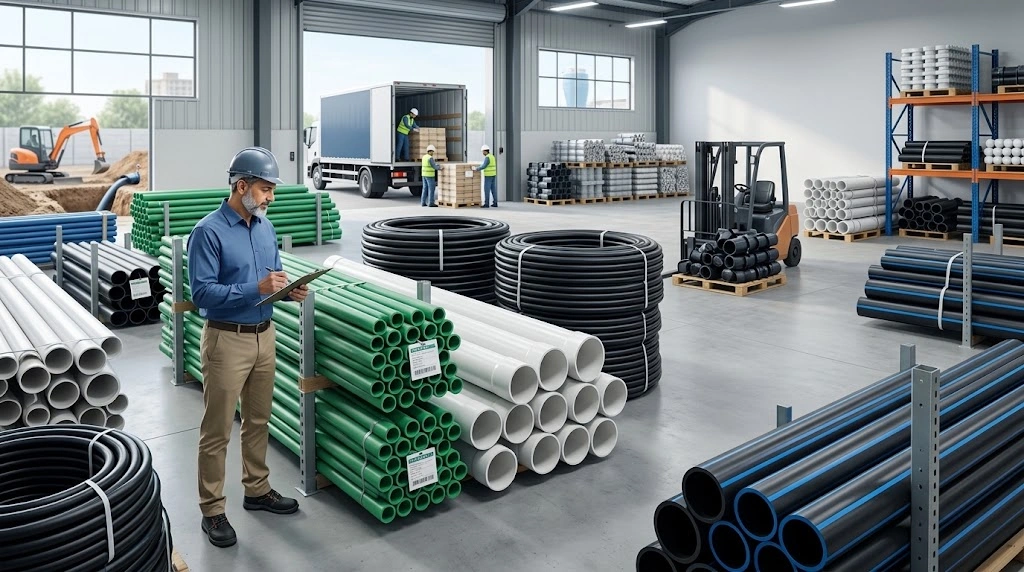
- Storage capability. Pipe, especially larger HDPE coils and straight lengths, needs space that keeps stock off direct sun and away from contamination, plus room to handle bulk deliveries.
- Working capital for opening stock. Distributorship businesses typically need to carry inventory rather than order pipe-by-pipe, so some upfront investment in stock is standard across this industry.
- Basic technical familiarity or willingness to be trained. Dealers who can explain the difference between PE80 and PE100, or between HDPE and PPRC applications, close more sales and generate fewer post-sale complaints.
- A track record of reliability. Existing relationships with contractors, plumbers, or housing-society vendors help a new dealership move stock from day one.
If you meet most of these, reaching out to NewTech directly is the right next step — exact requirements, minimum order volumes, and territory availability are confirmed case by case.
Margins and Commercial Terms: What to Expect
Every manufacturer structures margins differently, and NewTech’s specific dealer pricing, minimum order quantities, and payment terms are set out during direct discussion with the sales team rather than published generically — territory, product mix, and order volume all affect the numbers. That said, buyers evaluating any pipe distributorship Pakistan opportunity should expect the general shape of pipe-industry margins to work roughly as follows:
Factor | What to Ask About |
Margin structure | Whether margin is a flat percentage or tiered by volume |
Payment terms | Advance payment, credit terms, or a mix |
Minimum order quantity | Whether it’s manageable for your storage and cash flow |
Exclusivity | Whether your territory is protected from other dealers |
Return/exchange policy | How damaged or slow-moving stock is handled |
Price protection | Whether you’re notified in advance of price changes |
A dealership that won’t discuss these points clearly before you commit stock and capital isn’t one worth pursuing — regardless of which manufacturer it is.
Support You Should Expect as an Authorized Dealer
Margin alone doesn’t make a dealership worthwhile. The manufacturer’s after-sales and technical support directly affects how easily you can sell, and how few problems land back on your counter. As part of NewTech’s authorized pipe supplier network, dealers typically gain access to:
- Product training on HDPE (PE-100, ISO 4427), PVC, PPRC, MDPE, and electrical conduit ranges, so counter staff can answer technical questions correctly
- Marketing and branding materials — signage, catalogues, and product literature that help establish the dealership’s credibility locally
- Technical backup for site queries, including guidance on butt-fusion welding for HDPE systems and correct fitting selection
- Reliable supply consistency, backed by ISO 9001:2015-certified production, which matters most on multi-phase projects where material ordered months apart still needs to match on wall thickness and pressure rating
- Access to the full product catalogue, including NewTech’s own PLAST-1 HDPE butt-fusion fittings and the FISH-brand compression fittings it distributes as NORMA Group’s sole Pakistani distributor
This kind of support matters most in the moments a dealership actually gets tested — a contractor asking why a joint failed, a housing society demanding test certificates before releasing payment, or a customer comparing your quoted price against an uncertified alternative down the road. A manufacturer that responds quickly to these situations, rather than leaving the dealer to handle technical disputes alone, is worth more over time than a marginally better margin percentage. When evaluating any pipe distributorship Pakistan opportunity, ask specifically how technical and after-sales support is delivered — by phone, by site visit, or only through printed literature — since that answer tells you how the relationship will actually function once you’re stocking and selling.
A Practical Example: Adding Pipe to an Existing Hardware Business
Consider a hardware retailer in Multan already supplying cement, steel, and basic plumbing hardware to local contractors and DHA-Bahria-area housing projects. Contractors currently source HDPE and PVC pipe separately, from a supplier across town, which slows down their procurement and costs the retailer repeat sales on a category their existing customers already need.
Adding an authorized pipe line lets that retailer consolidate the order — a contractor buying cement and rebar can now also collect PPRC pipe for internal plumbing and HDPE pipe for the external water supply line in one stop. Over a multi-phase housing project, that consolidation adds up: the retailer captures pipe, fittings, and eventually welding-related consumables across the full build, instead of losing that business to a dedicated pipe shop.
This is the kind of scenario NewTech’s distributor network is built around — matching genuine, recurring local demand with a dealer who already has the customer relationships to serve it.
The same logic applies beyond housing societies. A plumbing supplier already serving SNGPL-approved gas fitters, or an agricultural hardware dealer supplying tube-well contractors in Punjab’s irrigation belt, is sitting on demand for MDPE gas pipe or HDPE irrigation pipe that a nearby dealership relationship could capture. In each case, the dealer isn’t creating new demand — they’re positioning themselves to serve demand that already exists in their customer base, backed by a manufacturer whose certification and batch consistency can withstand scrutiny from utility inspectors or project engineers.
How to Apply
If you’re ready to explore authorized pipe distributorship Pakistan opportunities with NewTech, the process generally starts with a direct conversation rather than a form-only application, since territory availability and product mix need to be discussed case by case. Reach out through NewTech’s contact channels with basic details about your business — location, current trade lines, storage capacity, and target customer base — and the sales team will advise on next steps, including any documentation or site visit required.
Conclusion
Becoming an authorized pipe dealer in Pakistan is a genuine opportunity in a market where demand for water, gas, and plumbing infrastructure keeps growing — but the right partner matters as much as the right product. Look for clear margin terms, real technical support, and consistent supply before committing capital to any dealership. NewTech-Pipes, as an ISO 9001:2015-certified manufacturer with over two decades of production experience serving DHA, Bahria Town, FWO, and SNGPL projects, is one option worth a direct conversation if you’re evaluating where to build your pipe distributorship business.
Frequently Asked Question's
It depends on the manufacturer, product mix, and territory. Most pipe distributorships require enough capital to carry opening stock plus working capital for ongoing orders. Discuss specific minimum order quantities and payment terms directly with the manufacturer’s sales team before committing.
No formal technical background is required, but a willingness to learn basic product knowledge helps significantly. NewTech provides product training so dealers and counter staff can advise customers accurately on HDPE, PVC, PPRC, and MDPE applications.
This depends on the terms agreed with NewTech, particularly around exclusivity in your territory. Ask directly whether your agreement allows multi-brand stocking or requires exclusive representation for pipe and fittings.
A distributor typically buys in bulk directly from the manufacturer and supplies a wider territory, sometimes including smaller dealers. A dealer usually runs a single retail or trade counter selling directly to contractors and end users. Both represent the manufacturer’s brand and quality standards.
This varies by manufacturer, but typically includes basic business registration details, proof of trade premises, and sometimes bank or trade references. Confirm the exact list with NewTech’s sales team, since requirements can differ by city and product category.