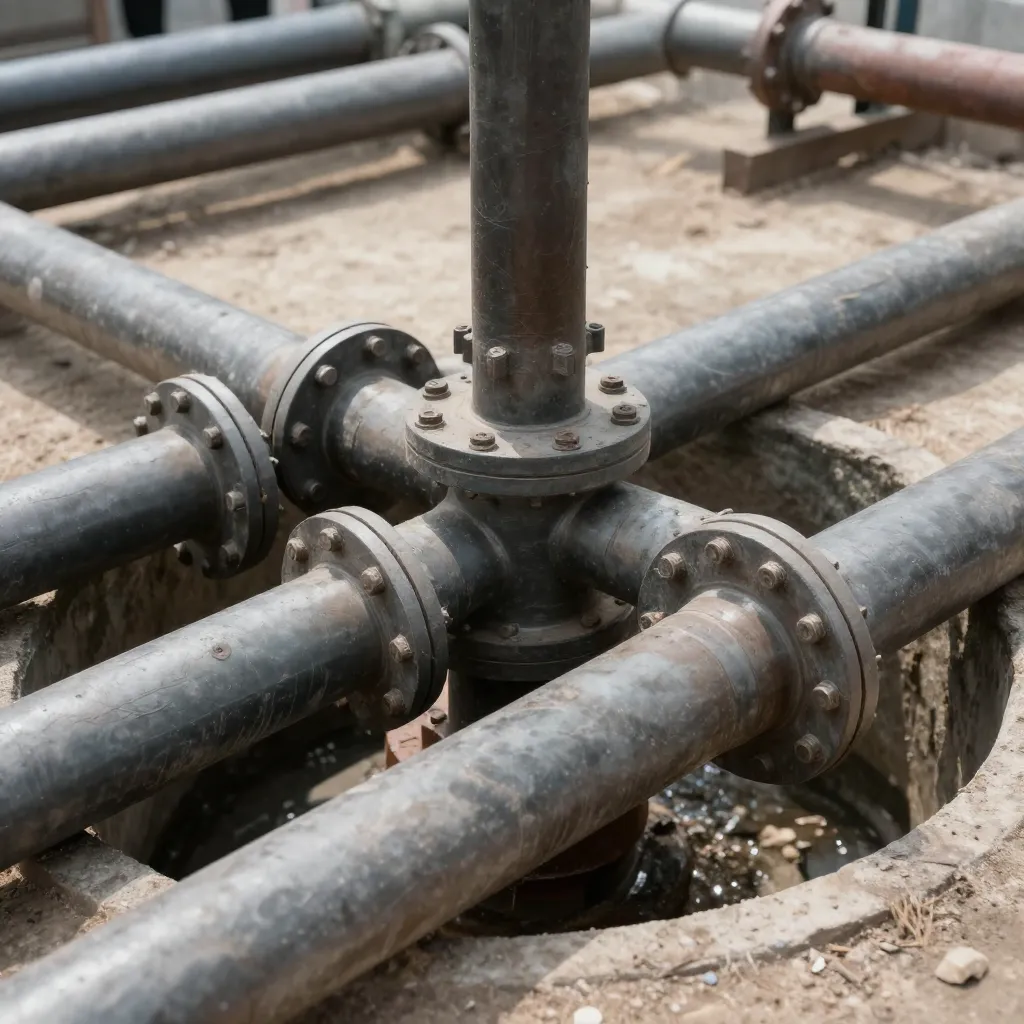
A tube well is only as reliable as the pipe used to bring water to the surface. Farmers and contractors across Punjab and Sindh often face the same ongoing challenge: pipes for tube well installations that crack under pressure, corrode after just a few seasons, or fail to withstand the sediment-heavy water commonly found in agricultural groundwater. These issues can result in repeated and expensive repairs, especially during the peak irrigation season.
This guide covers which pipe materials actually hold up for tube wells and irrigation, the sizes and pressure ratings that matter, and how to choose correctly the first time — so your system runs through a full growing season without unplanned downtime.
Why Pipe Choice Matters More for Tube Wells Than Ordinary Plumbing
Tube well rising mains face conditions that ordinary household plumbing never does:
Continuous, often high, operating pressure from submersible or turbine pumps running for extended hours during irrigation season.
Ground movement and vibration from pump operation, which stresses rigid joints over time.
Abrasive, sediment-heavy water in many groundwater sources, which can accelerate wear at joints and fittings.
Long service runs, often buried or laid across open fields, with limited routine inspection.
This combination of sustained pressure, vibration, and limited monitoring is exactly why the right pipe material and jointing method matter so much more here than for a typical household water line.
HDPE Pipe for Agriculture: The Standard Choice
For tube well rising mains, HDPE pipe for agriculture has become the standard choice across Pakistan for good reason:
Flexibility — HDPE bends to accommodate uneven field terrain and pump vibration without stressing joints, unlike rigid pipe.
No corrosion — unlike GI pipe, HDPE never rusts or scales, which matters over years of continuous exposure to groundwater.
Fused joints — butt-fusion or electrofusion jointed HDPE pipe creates a continuous, leak-resistant line with far fewer failure points than threaded or glued alternatives.
Impact and crack resistance — HDPE handles the mechanical stress of pump start/stop cycles and ground settling better than rigid materials.
Most tube well rising mains in Pakistan use HDPE pipe in the 75mm to 160mm diameter range, depending on the pump’s discharge capacity and the well’s depth, with PE100 grade increasingly preferred over PE80 for its higher long-term strength rating.
Choosing the Right SDR and Pressure Rating
Tube well pipe needs to be rated for more than just the pump’s normal operating pressure — it must also handle the pump’s shutoff head (the maximum pressure generated when the pump runs against a closed or restricted line), which is typically higher than normal running pressure.
| SDR Rating | Typical Application |
|---|---|
| SDR 17 | Shallow tube wells, moderate pump capacity |
| SDR 13.6 | Deeper wells or higher-capacity pumps |
| SDR 11 | High-pressure or high-capacity irrigation systems |
A practical example: a tube well running a submersible pump with a shutoff head noticeably above its normal operating pressure needs a pipe SDR rated to that higher shutoff figure — not just the pressure seen during normal operation — to avoid pipe failure during pump start-up surges.
Irrigation Pipes Pakistan-Wide: Beyond the Rising Main
Irrigation pipes Pakistan farmers rely on aren’t limited to the tube well rising main itself. A complete system typically includes:
Rising main — HDPE, from the pump to ground level, as covered above.
Distribution/field lines — often HDPE or, in lower-pressure sprinkler and drip systems, Thinner-walled PE pipe designed specifically for surface or shallow-buried distribution.
Fittings and valves — compatible with the fusion method used on the main line, sized to avoid unnecessary pressure loss across the field.
For drip and sprinkler irrigation specifically, lower-pressure PE pipe is often used for field distribution, while the tube well rising main itself still requires the higher-pressure-rated HDPE described above — these are not interchangeable within the same system.
Casing Pipe vs Rising Main: Don’t Confuse the Two
A common point of confusion: the borewell casing pipe (which lines the drilled well hole itself) is a different product from the rising main (which carries water from the pump to the surface). Casing pipe is typically selected for structural support and compatibility with the drilling method used, while the rising main is selected primarily for pressure rating and flow capacity. Buying one when the project actually calls for the other is a common and expensive mistake — always confirm which component you’re sourcing before ordering.
Standards and Certification to Check
Before buying pipe for a tube well or irrigation project, verify:
PSQCA certification mark, confirming compliance with the relevant Pakistan Standard for polyethylene pipe.
ISO 4427 conformance, the international standard for PE water supply pipe.
SDR rating stamped on the pipe, matched to your pump’s actual shutoff head, not just its normal operating pressure.
Manufacturer’s ISO 9001:2015 certification, reflecting consistent quality control across production batches — important since tube well pipe is often bought in bulk for multi-well projects.
You can review NewTech-Pipes’ quality control standards for an example of what documentation a certified manufacturer should provide.
Installation Tips for Tube Well Pipe
Match pipe diameter to pump discharge rate, not just well depth — an undersized rising main creates unnecessary pressure loss and reduces effective output.
Use proper trench bedding for any buried distribution lines, avoiding sharp stones or debris that can point-load the pipe.
Support the rising main adequately within the well casing to prevent excessive strain at the pump connection point.
Inspect fusion joints before lowering the rising main, since repairs after installation mean pulling the entire pump assembly back out.
Plan for seasonal start-up surges — irrigation systems often sit idle between seasons, and the initial pressure surge on restart is a common time for a marginal joint to fail.
Conclusion
Choosing the right pipes for tube well and irrigation systems comes down to matching HDPE’s flexibility and pressure rating to your pump’s actual shutoff head, not just its everyday operating pressure. Getting the SDR, diameter, and certification right before installation avoids the costly mid-season failures that plague poorly specified systems. NewTech-Pipes manufactures HDPE pipes and fittings to ISO 4427 and PSQCA standards, giving farmers and contractors a certified option built for Pakistan’s agricultural irrigation demands.
Frequently Asked Question's
HDPE pipe is generally the best choice for tube well rising mains due to its flexibility, corrosion resistance, and fused joints, which handle sustained pressure and pump vibration better than rigid alternatives like GI or PVC.
Most tube well rising mains use HDPE pipe in the 75mm to 160mm diameter range, depending on pump discharge capacity and well depth. Always match diameter to your specific pump’s flow rate rather than assuming a standard size fits every well.
PVC is sometimes used for shallow, low-pressure wells, but HDPE is generally preferred for rising mains carrying pressurized water, since it handles ground movement, pump vibration, and pressure surges more reliably over a long service life.
Casing pipe lines the drilled well hole for structural support, while the rising main carries water from the pump to the surface. These serve different structural purposes and should not be substituted for one another.
Match the pipe’s SDR rating to your pump’s shutoff head — the maximum pressure generated when the pump runs against a closed or restricted line — rather than just its normal operating pressure, since start-up surges are often the actual point of failure.