Wiring a new house or commercial space in Pakistan almost always involves a decision that gets rushed: which conduit pipe to run wires through. Electrical conduit pipes Pakistan-wide come in a few different types and sizes, and picking the wrong one can mean cracked pipe embedded in a wall, wiring that’s hard to pull through, or a setup that doesn’t meet basic fire-safety practice.
This guide covers the main conduit pipe types used in Pakistan, common conduit pipe sizes, what standards to check before buying, and practical installation tips — so your wiring is protected properly the first time, without costly rework later.
What Is Electrical Conduit Pipe, and Why Use It?
Conduit pipe is a protective casing that wiring runs through — inside walls, under floors, or exposed along a surface. Rather than burying cables directly in concrete or plaster, conduit gives you a dedicated channel that:
Protects wiring from physical damage during and after construction (nail punctures, drilling, settling cracks).
Allows future rewiring without breaking open walls, since cables can be pulled and replaced through the existing conduit.
Reduces fire risk by keeping wiring separated from direct contact with combustible building materials.
Simplifies inspection and maintenance, since electricians can trace and access wiring runs more predictably.
Types of Electrical Conduit Pipe Used in Pakistan
PVC Conduit Pipe
By far the most common choice for residential and commercial wiring in Pakistan. Key PVC conduit pipe uses include:
Concealed wiring inside walls and ceilings during construction
Surface-mounted wiring in commercial and industrial spaces
Underground cable protection for outdoor lighting and low-voltage runs
PVC conduit is popular because it’s lightweight, corrosion-proof, non-conductive, and considerably cheaper to install than metal conduit — while still meeting standard residential and commercial wiring code requirements.
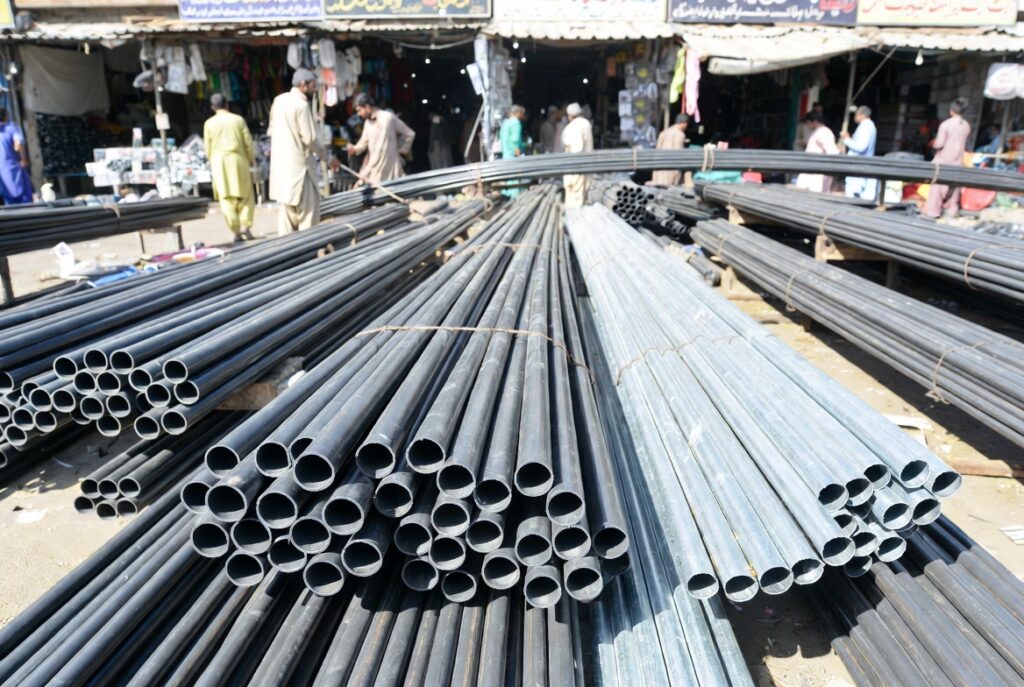
Galvanized Steel (GI) Conduit
Used in higher-risk or heavy-industrial settings where mechanical protection matters more than cost — factory floors, areas with heavy equipment movement, or locations requiring extra grounding/earthing continuity through the conduit itself. GI conduit costs significantly more than PVC and requires threading or coupling at every joint.
Flexible Conduit
Corrugated, bendable conduit used for short connections to equipment, junction boxes, or areas with tight, irregular routing where rigid pipe isn’t practical. It’s typically paired with rigid PVC or GI conduit for the bulk of a wiring run.
Electrical Conduit Pipe Sizes
Common conduit pipe sizes used in Pakistani residential and commercial construction:
| Size (mm) | Typical Use |
| 20mm (¾”) | Single or dual-cable lighting circuits |
| 25mm (1″) | Standard household socket/lighting circuits |
| 32mm | Higher cable-count runs, distribution board feeds |
| 40mm+ | Commercial risers, multiple-circuit trunking |
A practical rule electricians use: never fill a conduit beyond roughly 40% of its internal cross-sectional area with cable — overfilling makes future rewiring difficult and increases heat buildup around bundled cables.
PVC vs GI Conduit: Quick Comparison
| Property | PVC Conduit | GI Conduit |
| Cost | Lower | Higher |
| Weight | Lightweight | Heavy |
| Corrosion resistance | Excellent | Requires galvanized coating, can degrade over time |
| Conductivity | Non-conductive (insulating) | Conductive — can serve as earth continuity path |
| Best for | Residential, standard commercial wiring | Heavy industrial, high mechanical-risk areas |
| Installation | Fast, solvent-cement or push-fit joints | Slower, threaded joints |
For the overwhelming majority of homes and standard commercial buildings in Pakistan, PVC conduit is the practical and code-compliant default; GI conduit is reserved for specific industrial or high-mechanical-stress scenarios.
Standards and Certification to Check
Before buying conduit pipe, verify:
PSQCA certification mark, confirming the pipe meets the relevant Pakistan Standard for electrical conduit.
Flame-retardant/self-extinguishing rating, since conduit pipe (unlike general PVC pipe) should be manufactured to resist sustained combustion if exposed to heat or fire.
Wall thickness consistency — thin, brittle conduit cracks easily during installation and offers little real physical protection once embedded.
Manufacturer’s ISO 9001:2015 certification, reflecting consistent quality control across production batches — particularly relevant since conduit is often embedded and essentially unreplaceable without breaking open finished walls.
You can review NewTech-Pipes’ quality control standards for an example of what documentation a certified manufacturer should provide.
Installation Tips for Electrical Conduit Pipe
Plan conduit routing before pouring concrete or plastering — embedded conduit is essentially permanent, so mistakes are expensive to correct later.
Avoid sharp bends — use proper conduit bends or elbow fittings rather than forcing pipe into a tight radius, which can crack the pipe or damage cable insulation during pulling.
Leave a draw wire in empty conduit runs during construction, making future cable installation significantly easier.
Seal conduit ends temporarily during construction to prevent debris, concrete slurry, or moisture from entering before wiring is pulled through.
Respect the 40% fill rule mentioned earlier — overfilled conduit is one of the most common reasons rewiring becomes difficult years later.
Keep conduit joints properly solvent-cemented or push-fit sealed, especially for any conduit exposed to moisture or run underground.
Choosing the Right Conduit for Your Project
A simple decision framework:
Standard home or office wiring, concealed in walls? → PVC conduit, 20–25mm for most circuits.
Higher cable count or distribution board feeds? → 32mm+ PVC conduit.
Heavy industrial site or area needing extra mechanical protection? → GI conduit.
Short, tight connections to equipment or junction boxes? → Flexible conduit, paired with rigid pipe for the main run.
Conclusion
Choosing the right electrical conduit pipe comes down to matching the type and size to your wiring load and installation setting — PVC conduit handles the overwhelming majority of residential and commercial needs, while GI conduit serves specific industrial cases. Getting size, fill ratio, and certification right during construction avoids expensive rework later, since conduit is largely inaccessible once walls are finished. NewTech-Pipes manufactures electrical conduit pipes and fittings to relevant certification standards, giving electricians and builders a reliable option for new construction and renovation wiring projects alike.
Frequently Asked Question's
Pakistan’s pipe manufacturing sector includes a mix of large listed companies, decades-old regional brands, and specialized manufacturers, including NewTech-Pipes, International Industries Limited, Popular Pipes Group, Plasco Pipes, and several others each with different product strengths and regional presence.
Yes — PVC conduit manufactured specifically for electrical use is non-conductive and should carry a flame-retardant rating, distinguishing it from general-purpose PVC pipe. Always confirm the conduit is certified for electrical use rather than substituting standard plumbing-grade PVC pipe.
PVC conduit pipe uses include concealed wiring inside walls and ceilings, surface-mounted wiring in commercial spaces, and protection for underground low-voltage cable runs, giving wiring a dedicated, damage-resistant channel that also simplifies future maintenance.
This isn’t recommended. Electrical conduit pipe is manufactured with flame-retardant properties and specific wall thickness standards for cable protection, while plumbing-grade PVC is optimized for water flow and pressure, not fire safety or cable-pulling durability.
A common guideline is to avoid filling conduit beyond about 40% of its internal cross-sectional area with cable. Overfilling makes pulling new or replacement cables difficult and can increase heat buildup within bundled wiring.