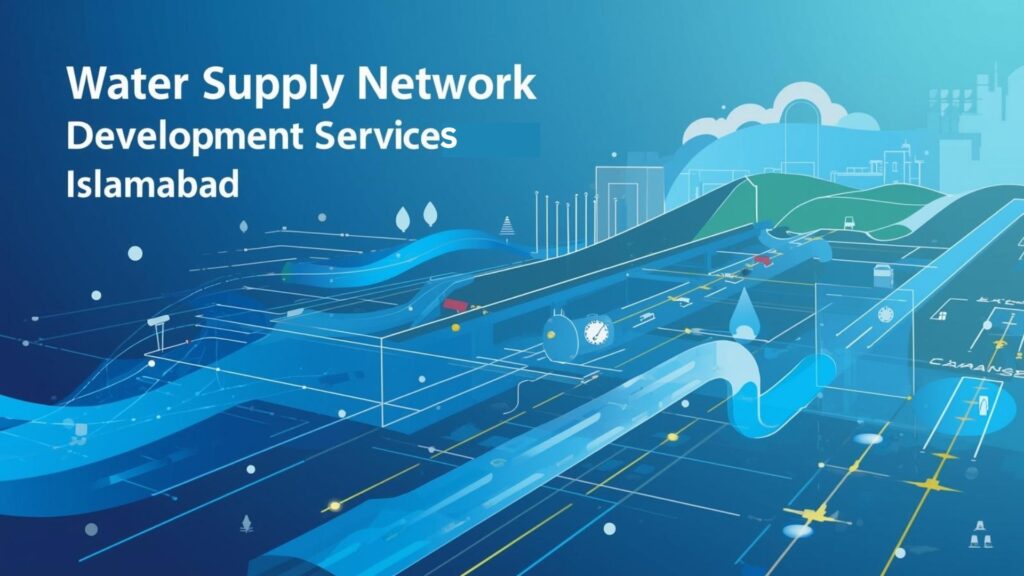
Is your water supply network in Islamabad struggling to meet the growing demands of a rapidly expanding city? If you’re managing a business or working in urban planning in the capital, you’re likely aware of the increasing pressure on water infrastructure. With Islamabad’s population steadily rising, the need for a robust and sustainable water supply network has never been more critical. Imagine facing frequent water shortages or outdated piping systems—issues that affect everything from daily business operations to residential life.
In this post, we’ll dive deep into how efficient water supply network development services in Islamabad are solving these challenges. By the end, you’ll understand the practical solutions available to improve your water infrastructure and support the city’s sustainable growth.
Why is Efficient Water Supply Network Development Crucial in Islamabad?
Islamabad is one of the fastest-growing cities in Pakistan, with its population surging in recent years. As urban expansion continues, so does the demand for reliable water distribution. Unfortunately, the existing water supply network in Islamabad, much like in many other cities, is facing challenges related to aging infrastructure, increased demand, and climate change-induced fluctuations in water supply.
Pro Tip: Investing in modernizing your water infrastructure now can save businesses and local governments millions in the long run.
Without effective water supply network development, the city will struggle with water scarcity, quality issues, and inefficiency, which will affect both commercial and residential sectors. This is where efficient water supply network services come into play.
How Can Water Supply Networks Be Improved in Islamabad?
Addressing the Current Water Supply Issues
The water supply network in Islamabad faces numerous challenges. From leaks in old pipes to uneven distribution in remote sectors, the city’s infrastructure is strained under the increasing population. However, recent advancements in engineering and technology provide ways to improve this system.
Case Study: The Rawalpindi-Islamabad Water Supply Project
In a collaborative effort, the governments of Rawalpindi and Islamabad undertook the Rawalpindi-Islamabad Water Supply Project to improve water distribution in both cities. The project, which involved laying down new pipelines and installing modern filtration plants, is a great example of how infrastructure development can address critical water supply challenges.
Actionable Tip: If you manage a property or business, consider collaborating with local authorities on infrastructure upgrades. Small-scale improvements, like replacing outdated piping or installing water-efficient systems, can make a significant impact.
Improving Water Storage Systems
One of the most important aspects of water supply network development is the effective management of water storage. In many cities, water is stored in reservoirs or elevated tanks, but Islamabad’s system requires modern solutions for efficient storage and distribution.
Expert Insight: Smart water storage systems, like automated tanks with remote monitoring capabilities, can help manage water usage and reduce waste.
Recent advancements in technology have enabled cities to monitor water consumption more effectively, offering solutions like automated meters and predictive maintenance. This data-driven approach ensures that water is used efficiently and waste is minimized.
High-Quality Pipes & Fittings – Built to Last
The Role of Sustainable Practices in Water Network Development
The world is moving towards more sustainable practices in every sector, and water supply is no exception. In Islamabad, integrating green infrastructure into the water supply network development is gaining traction. By employing sustainable practices, such as rainwater harvesting and wastewater recycling, the city can reduce its reliance on external water sources and mitigate future supply issues.
Pro Tip: Incorporating sustainable water solutions not only conserves water but can also help reduce operational costs.
How Can Technology Help Optimize Water Distribution in Islamabad?
With advancements in technology, Islamabad’s water distribution systems are becoming smarter and more efficient. IoT-enabled devices and real-time monitoring systems are transforming the way water is distributed across the city.
Case Study: The Lahore Water Supply Automation Project
In Lahore, the introduction of a smart water supply system helped monitor pressure levels and detect leaks in real-time, improving service delivery by 20%. This technology, when implemented in Islamabad, can reduce water losses and improve efficiency.
Actionable Tip: Consider installing smart water meters in your commercial buildings or homes. These meters can track water usage, alert you to leaks, and even optimize your water usage over time.
Why Should Businesses Care About Water Supply Network Development?
Water is a fundamental resource for any business, especially for industries like manufacturing, food processing, and hospitality. Having a reliable water supply network is crucial for uninterrupted operations. With Islamabad’s water supply network under stress, businesses must explore ways to safeguard their water supply.
Expert Insight: Businesses should not only rely on the city’s infrastructure but consider integrating their own water-saving solutions such as greywater systems, water-efficient fixtures, and even onsite water treatment plants.
Incorporating water-saving technologies can reduce a business’s operational costs and demonstrate a commitment to sustainability, improving brand image.
Pro Tip: Regularly audit your water usage and identify areas for improvement, such as replacing leaky faucets, upgrading pipes, or investing in water-efficient systems.
What are the Long-Term Benefits of Investing in a Modernized Water Supply Network?
Upgrading water supply infrastructure isn’t just about fixing immediate problems—it’s about ensuring long-term sustainability for the city and businesses alike. Efficient water supply network development in Islamabad can:
- Reduce water losses: Modern systems can detect leaks and prevent wastage, saving both money and resources.
- Support economic growth: Reliable water supply supports various industries, from construction to hospitality, helping businesses thrive.
- Increase resilience: A sustainable water system ensures that the city is prepared to handle future challenges, such as population growth and climate variability.
Case Study: The Water Supply Modernization in Karachi
Karachi, Pakistan’s largest city, has seen tremendous growth in recent years. In response, the Karachi Water & Sewerage Board launched a major water infrastructure overhaul, including the installation of state-of-the-art water treatment plants and new pipelines. The result? Fewer water outages, increased supply efficiency, and a noticeable improvement in water quality.
Conclusion
Efficient water supply network development services are essential for the sustainable growth of Islamabad. With the city’s population continuing to expand, it is crucial to modernize the water supply infrastructure to meet current and future demands. By integrating smart technologies, sustainable practices, and proactive management strategies, Islamabad can overcome its water challenges and build a resilient water supply network.
Next Steps: If you’re involved in urban planning, infrastructure development, or business operations in Islamabad, now is the time to explore modern solutions for improving the city’s water supply. By doing so, you’ll contribute to the long-term prosperity of Islamabad while securing a more reliable water supply for yourself and your community.
FAQ Section
1. What is a water supply network, and why is it important for Islamabad?
A water supply network refers to the system of pipelines, storage tanks, and treatment plants that deliver water to homes and businesses. In Islamabad, a well-developed network ensures reliable access to clean water for a growing population.
2. How can Islamabad overcome its water shortage issues?
By investing in infrastructure upgrades, including modern filtration systems, smart water meters, and sustainable practices such as rainwater harvesting, Islamabad can improve its water supply network and address shortages.
3. What technologies are being used to optimize water distribution?
IoT-enabled devices, smart meters, and real-time monitoring systems are being implemented in cities worldwide, including Islamabad, to optimize water distribution and reduce waste.
4. How can businesses reduce their water consumption?
Businesses can reduce water consumption by installing water-efficient fixtures, conducting regular water audits, and considering onsite water treatment or greywater systems to recycle water for non-potable uses.
5. What are the environmental benefits of upgrading water supply networks?
Upgrading water supply networks helps reduce water waste, minimizes the environmental impact of leaks, and conserves valuable resources, supporting both sustainability and long-term water security.
6. Can the development of water supply networks improve Islamabad’s economy?
Yes, reliable water supply networks support various industries, ensuring businesses have the resources they need to operate smoothly. This in turn fosters economic growth and attracts investment to the city.
7. What steps can residents take to contribute to water conservation in Islamabad?
Residents can save water by fixing leaks, using water-efficient appliances, and reducing water wastage in daily activities, all of which help support the city’s overall water conservation efforts.