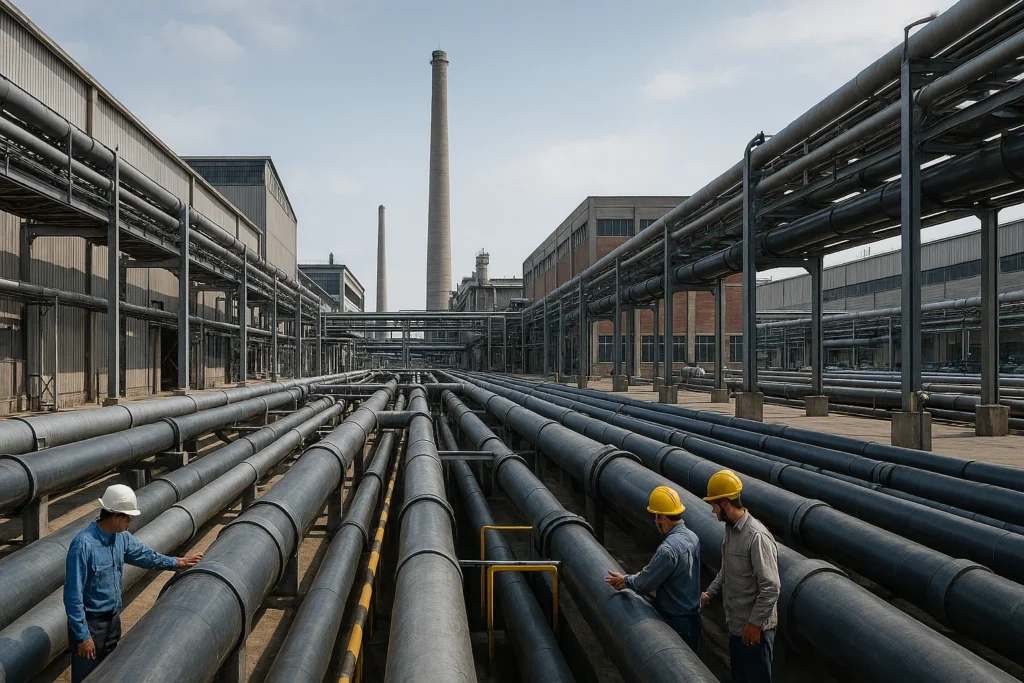
In the heart of Pakistan’s industrial landscape, Faisalabad stands as a critical hub for textile production, manufacturing, and industrial growth. As the demand for infrastructure and production capacities increases, so does the reliance on industrial pipes. From factories to construction sites, industrial pipes are the silent workhorses that power much of the region’s economic engine.
In this article, we will dive deep into the industrial pipe trends that are shaping the future of Faisalabad. You’ll learn why these trends matter for businesses in the region, discover real-world examples of how industrial pipes are being used, and gain actionable insights on how your business can leverage these trends to stay ahead.
Why is the Industrial Pipe Market Growing in Faisalabad?
Faisalabad’s industrial pipe market is booming, but why is that the case? The demand for industrial pipes in the region has been growing due to several factors, including the expansion of industrial facilities, infrastructural developments, and the increasing need for efficient water, gas, and waste management systems.
Key Drivers Behind Industrial Pipe Demand in Faisalabad
- Expansion of the Textile Industry: Faisalabad is the industrial heart of Pakistan’s textile sector. The need for water pipelines, chemical transport systems, and wastewater management is ever-growing as textile factories expand.
- Government Infrastructure Projects: The government’s commitment to improving infrastructure, particularly in the transport, energy, and construction sectors, has significantly boosted the demand for industrial pipes.
- Urbanization: As Faisalabad’s population increases, so does the need for more robust sewage systems, water lines, and industrial applications, pushing the demand for quality pipes even further.
Statistical Insight: Market Growth
The market for industrial pipes in Pakistan is projected to grow at a compound annual growth rate (CAGR) of 5.5% from 2024 to 2028. Faisalabad, with its booming industrial base, is expected to contribute heavily to this rise. This data reflects a growing reliance on pipe systems across industries in the region .
What Types of Industrial Pipes are in High Demand in Faisalabad?
Not all pipes are created equal, and depending on the application, certain types of industrial pipes are more in demand in Faisalabad than others. Let’s break down some of the most popular types:
Steel Pipes
Why They’re Popular: Steel pipes are crucial for the textile and manufacturing industries in Faisalabad, especially where high pressure and heavy-duty applications are necessary. They are used for transporting water, gas, and chemicals efficiently.
Real-World Example: A textile factory in Faisalabad recently upgraded its water and chemical transport pipelines to stainless steel, reducing maintenance costs by 30% over two years.
PVC Pipes
Why They’re Popular: Lightweight and resistant to corrosion, PVC pipes are a cost-effective solution for water and sewage systems. These pipes are commonly used in residential, commercial, and light industrial applications.
Expert Insight: “The adoption of PVC pipes in Faisalabad has been growing due to their affordability and ease of installation, especially for smaller-scale industrial projects,” says Asim Raza, an industrial piping expert based in Faisalabad.
HDPE Pipes
Why They’re Popular: HDPE (High-Density Polyethylene) pipes are particularly favored in water supply systems because of their flexibility, resistance to environmental stress, and long-lasting nature. Given Faisalabad’s growing urban population, these pipes are becoming increasingly essential for water distribution networks.
How are Industrial Pipes Being Used in Faisalabad’s Key Sectors?
Faisalabad is home to a wide range of industries, from textiles and pharmaceuticals to food processing and manufacturing. Industrial pipes play a pivotal role in the functioning of each of these sectors. Let’s take a closer look at how they’re being used:
Textile Industry
The textile industry is the backbone of Faisalabad’s economy. Industrial pipes are critical for transporting water and chemicals in textile processing plants. Additionally, pipes are used to manage waste and ensure compliance with environmental regulations.
Case Study: A large textile mill in Faisalabad recently switched from traditional metal pipes to corrosion-resistant PVC pipes for transporting dye chemicals. This shift not only saved them 20% in operational costs but also improved safety standards by reducing leakage incidents.
Food Processing Industry
Food processing plants in Faisalabad use industrial pipes to carry water, chemicals, and natural gas. High-quality pipes are crucial to maintain hygiene standards and ensure the integrity of the production process.
Pro Tip: When choosing pipes for food processing, it’s vital to prioritize non-corrosive materials, like stainless steel, to ensure compliance with food safety regulations and prevent contamination.
Construction and Infrastructure
With ongoing infrastructure projects in Faisalabad, industrial pipes are in high demand for both sewage and water systems. Large-scale construction projects such as commercial buildings, roads, and residential developments require a vast network of piping systems.
What are the Emerging Trends in Industrial Pipe Usage in Faisalabad?
As Faisalabad continues to modernize, new trends in the industrial pipe market are emerging. These trends reflect the need for more sustainable, efficient, and cost-effective solutions.
1. Sustainable and Eco-Friendly Materials
With increasing environmental awareness, businesses in Faisalabad are gravitating towards more sustainable materials for industrial pipes, such as recycled PVC and eco-friendly polyethylene options.
2. Smart Pipe Systems
The introduction of smart technology into industrial pipes is revolutionizing the industry. Smart sensors are being embedded in pipes to monitor pressure, temperature, and fluid levels in real-time. This helps businesses reduce maintenance costs and avoid costly repairs.
Example: A local manufacturer recently integrated smart piping systems that alert their team to pipe pressure imbalances, allowing for preventative maintenance rather than reactive repairs. This resulted in a 15% reduction in downtime.
3. Increasing Automation in Piping Installation
Automation is increasingly being used in the installation of industrial piping systems. The benefits? Reduced labor costs, faster project completion, and improved precision.
What Challenges Do Businesses Face with Industrial Pipes in Faisalabad?
While the industrial pipe market in Faisalabad is growing, it’s not without its challenges. Here are some of the hurdles businesses face:
Supply Chain Issues
Supply chain disruptions can cause delays in the delivery of necessary piping materials. Local manufacturers and construction companies in Faisalabad often face delays due to these issues, impacting project timelines.
Quality Control
Maintaining the quality of industrial pipes is crucial. Businesses need to ensure that pipes meet regulatory standards and perform efficiently in demanding industrial applications. Subpar pipes can lead to costly breakdowns and safety hazards.
Expert Insight: “Ensuring pipe quality is non-negotiable. Business owners need to source pipes from reputable suppliers who comply with industry standards,” advises Asim Raza.
How Can Businesses Leverage the Growing Industrial Pipe Market?
If you’re a business owner in Faisalabad, now is the time to capitalize on the growing industrial pipe market. Here’s how:
- Invest in Quality Materials: Focus on sourcing pipes that offer long-term value, such as HDPE or stainless steel, to avoid costly replacements.
- Adopt New Technologies: Consider investing in smart piping systems to monitor your infrastructure’s performance and prevent costly issues.
- Stay Ahead of Trends: Embrace eco-friendly materials and sustainable practices to appeal to environmentally conscious clients.
Conclusion
The industrial pipe market in Faisalabad is evolving rapidly, driven by the region’s booming textile industry, infrastructure projects, and increasing demand for efficient water and chemical management systems. By staying informed about the latest trends and investing in high-quality, sustainable pipes, businesses can position themselves to thrive in this growing market.
Take Action Today:
- Evaluate your current piping systems: Are they up to the task of meeting growing demands?
- Consider upgrading: Invest in more durable, sustainable pipe options to reduce long-term operational costs.
- Stay updated: Keep an eye on emerging technologies like smart piping to maintain a competitive edge.
If you’re ready to explore more about industrial pipe usage in Faisalabad, check out these related resources on material selection, sustainable practices, and case studies from the industry.
FAQ Section
1. What are the most common materials used in industrial pipes in Faisalabad?
The most common materials used in Faisalabad’s industrial pipes include steel, PVC, and HDPE. Steel is typically used for heavy-duty applications, while PVC and HDPE are favored for lighter applications like water supply and sewage systems.
2. How are industrial pipes used in the textile industry?
Industrial pipes in the textile industry are primarily used for transporting water, chemicals, and managing wastewater. The textile industry’s heavy reliance on water and chemicals makes pipes essential for smooth operations.
3. What are smart pipes, and why are they gaining popularity in Faisalabad?
Smart pipes are equipped with sensors that can monitor various metrics like pressure, temperature, and fluid levels. They are gaining popularity due to their ability to prevent system failures and reduce maintenance costs by providing real-time data.
4. How does the growth of Faisalabad’s construction sector affect the industrial pipe market?
As Faisalabad’s construction sector grows, the demand for industrial pipes increases. New buildings and infrastructure projects require large-scale piping systems for water supply, sewage, and other utilities.
5. What are the environmental trends in Faisalabad’s industrial pipe market?
The increasing demand for sustainable solutions is driving the trend of eco-friendly materials such as recycled PVC and polyethylene pipes. These materials are not only more environmentally friendly but also cost-effective in the long run.
6. Are there any challenges with industrial pipes in Faisalabad?
Supply chain disruptions and quality control issues are some of the challenges faced by businesses in Faisalabad. It is crucial to source pipes from reliable suppliers to avoid delays and ensure product quality.