When it comes to pipe selection, one of the most crucial decisions is determining which schedule to choose. SCH 40 vs SCH 80 pipes: Does thicker always mean better? This is a question many engineers, contractors, and business owners face when deciding on materials for construction projects, especially when dealing with industrial plumbing, water supply, and HVAC systems.
In the world of pipes, the schedule refers to the wall thickness, with SCH 40 and SCH 80 being two of the most commonly used types. But how do you decide between the two? The answer isn’t always as simple as “the thicker the pipe, the better.” While SCH 80 pipes are certainly stronger and more durable, they come with their own set of advantages and limitations. Understanding the differences between these two pipe schedules can help you make the best decision for your project, ensuring both safety and cost-effectiveness.
In this blog post, we’ll break down the key differences between SCH 40 and SCH 80 pipes, and when each is best suited for different applications. We’ll also explore why thicker pipes might not always be the superior choice, and what other factors you should consider when selecting the right pipe for your project.
What is a Pipe Schedule?
What is SCH 40?
Schedule 40 is the most commonly used pipe schedule, particularly in residential and commercial plumbing. Its wall thickness is considered standard for most applications, offering a balanced combination of durability and ease of installation. SCH 40 pipes are lightweight, cost-effective, and come in various sizes for both pressure and non-pressure systems. The thinner walls of SCH 40 make it easier to handle and install, but it does come with limitations when dealing with high-pressure or corrosive environments.
What is SCH 80?
Schedule 80 pipes, on the other hand, have thicker walls compared to SCH 40 pipes. This thicker construction makes them stronger and more resistant to pressure and extreme environmental conditions. SCH 80 is typically used in industrial applications or in situations where higher pressure ratings are required, such as in chemical processing, heavy-duty plumbing, or high-temperature applications. The increased wall thickness means SCH 80 pipes can handle higher pressures but also come with a higher cost and more installation challenges.
Key Differences Between SCH 40 and SCH 80 Pipes
1. Wall Thickness
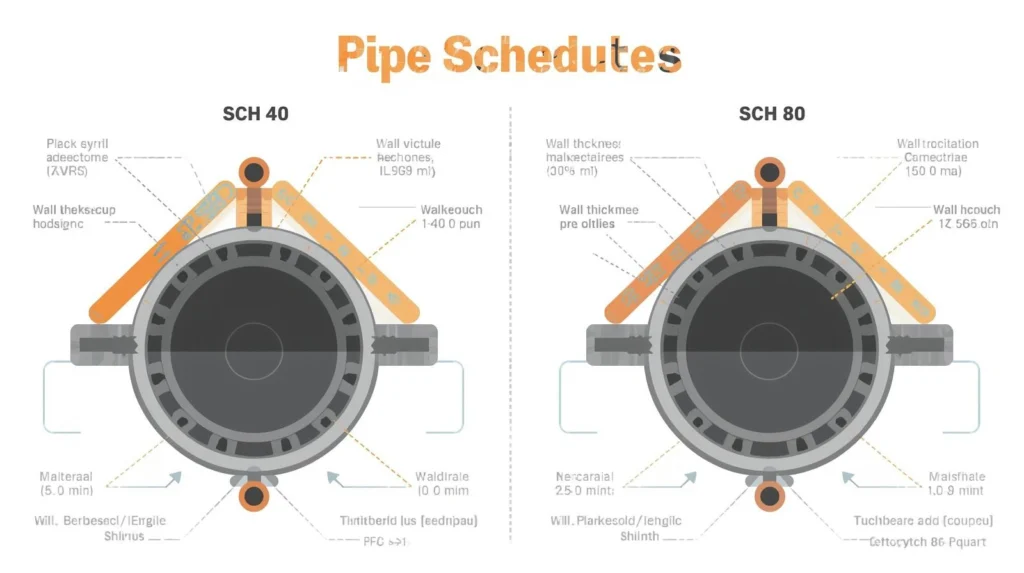
One of the most apparent differences between SCH 40 and SCH 80 pipes is the wall thickness. SCH 80 pipes are approximately 60% thicker than SCH 40 pipes. The increased thickness in SCH 80 pipes provides higher pressure ratings and better resistance to both mechanical and environmental stresses.
Why does this matter?
- SCH 40 pipes: Suitable for lower-pressure systems like residential plumbing, irrigation, and HVAC.
- SCH 80 pipes: Used for higher pressure systems such as industrial plumbing, chemical processing, and situations requiring greater durability.
2. Pressure Rating
Pressure rating refers to the maximum pressure a pipe can safely handle without failing. SCH 80 pipes have a higher pressure rating compared to SCH 40, making them ideal for use in systems requiring more strength and durability.
| Pipe Schedule |
Max Pressure (at 73°F) |
| SCH 40 |
1400 PSI (for 2-inch pipe) |
| SCH 80 |
2200 PSI (for 2-inch pipe) |
The higher pressure rating of SCH 80 pipes makes them the preferred choice for industries where pressure stability is critical, such as oil and gas, high-pressure water systems, and more.
3. Weight and Handling
SCH 80 pipes are heavier due to their thicker walls. This additional weight can make installation more challenging and may require specialized equipment. SCH 40 pipes, being lighter, are easier to handle and more convenient for projects that don’t demand high strength.
Pro Tip:
For projects where high pressure or durability isn’t as critical, SCH 40 is often the more practical and cost-effective choice due to its ease of handling.
4. Cost
The increased thickness of SCH 80 pipes comes at a higher cost. These pipes are more expensive than SCH 40, not only in terms of material cost but also when factoring in the installation process, as thicker pipes often require more labor and heavier equipment for handling.
5. Corrosion Resistance
While both SCH 40 and SCH 80 pipes can be made from materials like PVC, CPVC, or steel, the thicker walls of SCH 80 pipes generally provide better resistance to corrosion in high-stress environments. However, this doesn’t mean SCH 40 pipes are not effective for certain environments—they are still commonly used in a wide range of standard applications.
6. Flexibility and Applications
SCH 40 pipes are often used in less demanding environments, such as water distribution, drainage, and simple plumbing systems. SCH 80 pipes are typically reserved for industries like chemical processing, oil and gas, and industrial water systems, where the pipes must withstand both high pressure and corrosive substances.
High-Quality Pipes & Fittings – Built to Last
When Should You Choose SCH 40 Pipes?
Common Uses of SCH 40 Pipes:
- Residential Plumbing: Ideal for low-pressure systems.
- Irrigation Systems: Lightweight and effective for water distribution.
- HVAC: For systems that do not require high pressure ratings.
- Drainage Systems: Often used for wastewater or stormwater drainage.
Why Choose SCH 40?
SCH 40 pipes are an excellent choice for projects that don’t require high-pressure ratings or excessive durability. They are cost-effective, lightweight, and easy to install. Choosing SCH 40 for residential or light commercial projects allows for quick installation and a lower overall cost.
When Should You Choose SCH 80 Pipes?
Common Uses of SCH 80 Pipes:
- Industrial Applications: Chemical plants, refineries, and power plants.
- High-Pressure Systems: Including high-pressure water or gas systems.
- Extreme Environments: Where pipes are exposed to heat, cold, or chemicals.
- Heavy-Duty Plumbing: For commercial or industrial plumbing systems requiring strength.
Why Choose SCH 80?
SCH 80 pipes are perfect for situations that demand extra strength, higher pressure resistance, and durability. They are often used in industries where the pipes need to withstand rough handling or harsh conditions. Although more expensive, their ability to handle high-pressure and severe environments can save you from costly repairs in the long term.
Real-World Example: Choosing Between SCH 40 and SCH 80
Case Study 1: Residential Plumbing
In a residential plumbing system for a newly built home, SCH 40 pipes are ideal. The system only requires the pipes to carry water at standard pressure, making SCH 40 both a cost-effective and practical choice. Installation is straightforward, and the lower cost allows for more flexibility in the budget for other materials.
Case Study 2: Chemical Processing Facility
In contrast, a chemical processing plant requires SCH 80 pipes due to the high-pressure systems involved and the need for resistance to harsh chemicals. SCH 80 pipes are necessary to maintain the integrity of the piping system, preventing failures that could result in safety hazards or costly downtime.
Conclusion: Does Thicker Always Mean Better?
In conclusion, thicker does not always mean better when it comes to choosing between SCH 40 vs SCH 80 pipes. The choice depends largely on the project requirements, including pressure needs, environmental factors, and budget. While SCH 80 pipes offer more durability and higher pressure ratings, SCH 40 pipes are more cost-effective and ideal for many standard applications. The key is to assess the specific needs of your project—whether it’s residential plumbing or industrial processing—and select the pipe schedule that meets those needs while offering the best balance of cost, durability, and performance.
Call to Action:
If you’re still unsure which pipe schedule is right for your project, consult with an industry expert or engineer to ensure you choose the right pipe for your specific requirements. Want more pipe-related tips? Check out our other blog posts on pipe selection and maintenance strategies!
FAQ Section
1. What is the difference between SCH 40 and SCH 80 pipes?
SCH 40 pipes have thinner walls and are suitable for low-pressure applications, while SCH 80 pipes have thicker walls and can withstand higher pressures, making them ideal for industrial use.
2. Which pipe schedule is better for residential plumbing?
SCH 40 is generally better for residential plumbing due to its cost-effectiveness, lighter weight, and sufficient strength for most standard home applications.
3. Can SCH 80 pipes be used in residential plumbing?
Although SCH 80 pipes can technically be used for residential plumbing, they are often overkill due to their high cost and strength, which are better suited for industrial applications.
4. Why are SCH 80 pipes more expensive?
SCH 80 pipes are more expensive because they have thicker walls, which require more material, and they are designed for high-pressure and harsh environments, making them more durable and long-lasting.
5. How do I decide which pipe schedule to use?
To decide between SCH 40 and SCH 80, consider factors like the system’s pressure requirements, environmental conditions, and budget. For low-pressure, non-corrosive environments, SCH 40 is ideal, while SCH 80 is best for high-pressure, industrial systems.