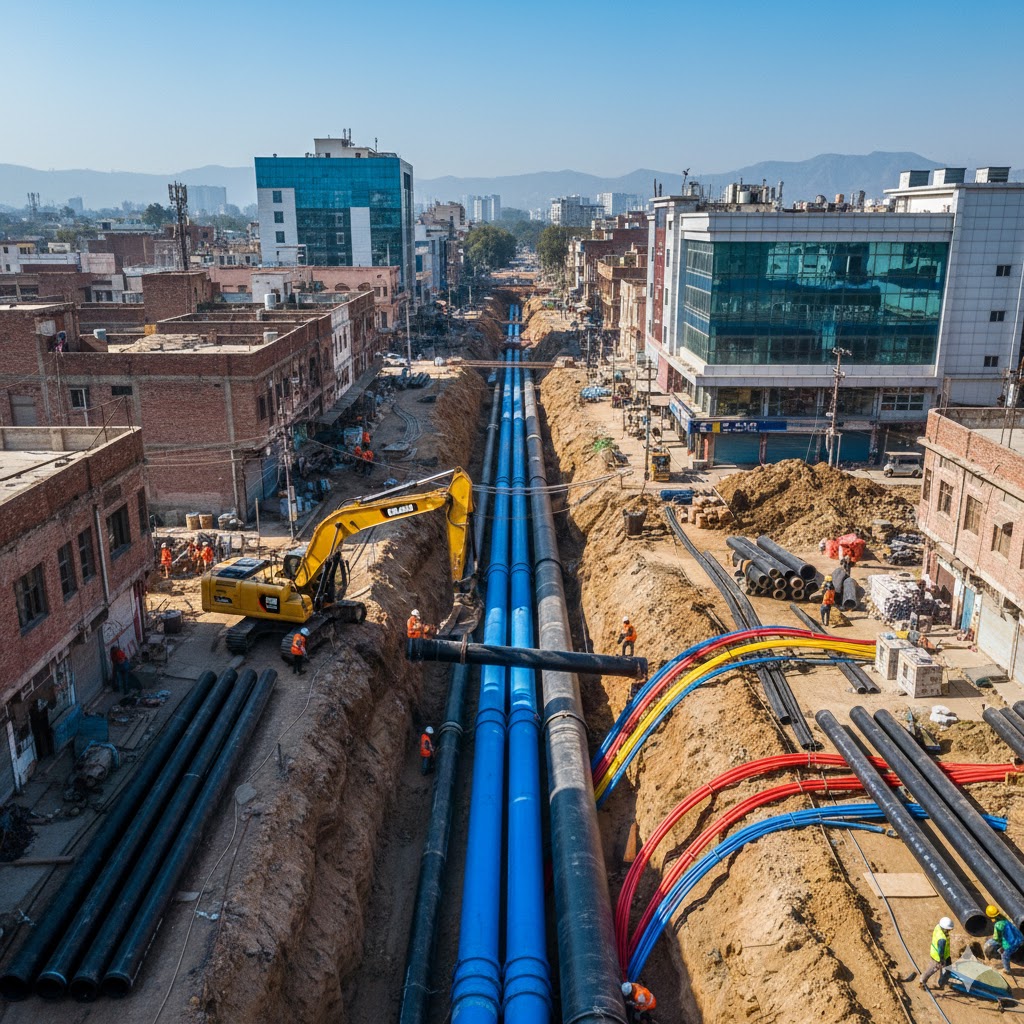
Have you ever wondered how the underground pipelines in Rawalpindi are designed and maintained? When you think about essential infrastructure, it’s easy to focus on above-ground elements like roads or buildings, but what about the critical systems running beneath our feet? Underground pipelines are the backbone of urban utilities, from water distribution to sewage and gas services.
In Rawalpindi, one of Pakistan’s most densely populated and rapidly growing cities, these underground systems are under immense pressure. As the population grows and infrastructure ages, the need for effective pipeline management has never been greater. In this article, we will explore the key requirements for underground pipelines in Rawalpindi, why they are critical to the city’s development, and the steps needed to ensure they meet the demands of the future.
What You’ll Learn:
- Why underground pipelines are crucial for Rawalpindi’s infrastructure.
- The specific requirements for designing and maintaining pipelines in the city.
- Key challenges and solutions for pipeline systems in Rawalpindi.
- Actionable tips for addressing pipeline issues in your own urban infrastructure projects.
Why Are Underground Pipelines Crucial for Rawalpindi?
Underground pipelines form the backbone of modern urban infrastructure. They’re responsible for transporting water, sewage, natural gas, and sometimes even electricity. Rawalpindi, with a population exceeding 2 million, faces significant challenges in maintaining and upgrading these vital systems.
Increasing Urbanization and Population Growth
As Rawalpindi continues to grow, the strain on its underground infrastructure becomes more apparent. According to a 2023 report by the Pakistan Bureau of Statistics, Rawalpindi’s population grew by 2.5% annually, putting additional pressure on already strained utility systems. Aging pipelines, originally designed for smaller populations, now struggle to meet the demands of a bustling urban center.
The Role of Underground Pipelines in Sustainable Development
Sustainability is at the heart of every major infrastructure project. In Rawalpindi, underground pipelines are a critical part of sustainable development. They minimize the need for surface-level constructions, reducing traffic disruptions and environmental impact. By investing in pipeline systems that are durable and efficient, Rawalpindi can address growing demands while minimizing the city’s carbon footprint.
What Are the Key Requirements for Underground Pipelines in Rawalpindi?
Material Durability and Quality
One of the primary concerns for underground pipelines in Rawalpindi is the material used for their construction. Rawalpindi’s soil conditions, which vary from clay to rocky terrain, require highly durable materials to withstand the test of time and pressure. Most pipelines are made from steel, PVC, or high-density polyethylene (HDPE), with HDPE being preferred for its flexibility and resistance to corrosion.
Pro Tip: Consider the terrain and environmental conditions of Rawalpindi before selecting materials. Materials like HDPE offer long-term cost savings due to their resistance to both corrosion and chemical reactions.
Proper Depth and Alignment
Another key requirement is the proper installation depth and alignment of underground pipelines. Installing pipes too shallow can expose them to accidental damage from construction activities or extreme weather conditions. Conversely, installing them too deep can make repairs and replacements more challenging. For Rawalpindi, which is subject to occasional flooding and soil erosion, finding the right depth for pipeline installation is crucial.
Expert Insight: Proper alignment ensures that the pipes are evenly distributed under pressure. Misaligned pipes can lead to blockages, water leakage, and expensive repairs.
What Are the Common Challenges in Rawalpindi’s Underground Pipeline Systems?
Aging Infrastructure
Rawalpindi’s pipeline network, particularly those installed decades ago, faces issues of aging and wear. The average lifespan of underground pipelines is between 40 and 50 years, and many of Rawalpindi’s pipelines are approaching or have exceeded that mark. Aging infrastructure results in frequent leaks, water contamination, and inefficiencies in distribution.
Expansion and Maintenance Strain
As the city expands, older pipelines often cannot handle the increased load. The infrastructure must be regularly maintained or upgraded to meet current demands. However, these upgrades require careful planning, as digging up older pipelines can disrupt daily life and traffic flow, causing inconvenience to residents.
Real-World Example: In 2022, a major water pipeline near Rawalpindi’s commercial district burst due to aging infrastructure. The result was a massive water shortage for several days, underscoring the importance of regular inspections and timely repairs.
How Can Rawalpindi Address These Challenges?
Regular Inspection and Monitoring Systems
To keep underground pipelines functional, Rawalpindi needs to invest in advanced monitoring systems. Modern technologies like smart sensors and GIS (Geographic Information Systems) can track pipeline performance in real-time, alerting authorities about potential issues such as leaks or blockages before they become major problems.
Pro Tip: Implement a comprehensive pipeline monitoring system that integrates both physical inspections and real-time data collection. This dual approach can significantly reduce emergency repair costs and downtime.
Public-Private Partnerships for Upgrades
Upgrading Rawalpindi’s underground pipeline network is no small task. However, public-private partnerships (PPPs) can play a significant role in speeding up the process. By partnering with private companies that specialize in infrastructure development, Rawalpindi can tap into both expertise and funding, ensuring that the city’s pipeline systems remain robust and efficient.
Expert Insight: PPPs allow for innovative solutions to pipeline issues, such as the use of trenchless technology for non-invasive repairs. This reduces disruptions to daily life and accelerates the process of upgrading old pipelines.
What Role Does Technology Play in Pipeline Infrastructure?
Trenchless Technology
One of the most exciting advancements in pipeline infrastructure is trenchless technology. This technique allows for pipeline repairs or replacements without the need to dig up entire streets, which can be both costly and disruptive. In Rawalpindi, trenchless technology could be the key to modernizing the underground pipeline network without causing chaos in the already congested urban landscape.
Real-World Example: Lahore has successfully used trenchless technology to replace old sewage pipes without significant surface disruption, and Rawalpindi could follow suit to enhance its infrastructure more efficiently.
Predictive Analytics
Using AI and predictive analytics can help Rawalpindi anticipate pipeline failures before they occur. By analyzing data on usage patterns, weather conditions, and maintenance history, predictive models can forecast which parts of the pipeline are most at risk. This proactive approach allows for scheduled maintenance and replacements rather than waiting for something to break.
How Can Rawalpindi’s Residents Contribute to Pipeline Maintenance?
Public awareness is essential in maintaining the integrity of underground pipelines. Rawalpindi residents can play a pivotal role by reporting signs of potential pipeline issues early on. Simple actions, such as avoiding excessive dumping of waste into the sewer system, can reduce the chances of blockages and contamination.
Expert Insight: Community awareness programs should be launched to educate the public on the importance of pipeline maintenance and encourage responsible waste disposal.
Conclusion
Underground pipelines are a critical part of Rawalpindi’s infrastructure, supporting everything from water supply to sewage systems. However, with the city’s rapid growth and aging infrastructure, there is a pressing need to address pipeline requirements head-on. By investing in advanced materials, technologies, and proactive maintenance strategies, Rawalpindi can build a more resilient and efficient pipeline network for the future.
To learn more about how you can contribute to this infrastructure transformation, consider exploring partnerships with local authorities or staying informed about the latest pipeline technologies.
FAQ Section
What materials are used in Rawalpindi’s underground pipelines?
The most common materials used for underground pipelines in Rawalpindi include HDPE, PVC, and steel, with HDPE being favored for its flexibility and resistance to corrosion.
How deep should underground pipelines be installed in Rawalpindi?
Pipelines should be installed at a depth of at least 1-1.5 meters, depending on the type of pipeline. Installing them too shallow risks exposure to damage, while too deep can make repairs difficult.
What is the lifespan of underground pipelines in Rawalpindi?
Underground pipelines typically last 40 to 50 years. Many of Rawalpindi’s pipelines are approaching or exceeding this lifespan, leading to frequent repairs.
How can Rawalpindi prevent pipeline bursts?
Regular inspections, monitoring systems, and timely upgrades can help prevent pipeline bursts. Technological solutions like trenchless technology also reduce the likelihood of extensive damage.
What role do public-private partnerships play in pipeline upgrades?
Public-private partnerships (PPPs) can provide both the expertise and financial resources needed to upgrade Rawalpindi’s pipeline infrastructure, allowing for more efficient solutions.
How can residents help with pipeline maintenance?
Residents can contribute by reporting leaks, blockages, or other issues promptly and by practicing responsible waste disposal, which can prevent clogs in the sewage system.
What is trenchless technology?
Trenchless technology allows for the repair or replacement of pipelines without the need to dig up streets, minimizing disruptions and costs. It is an efficient and eco-friendly solution for urban areas like Rawalpindi.