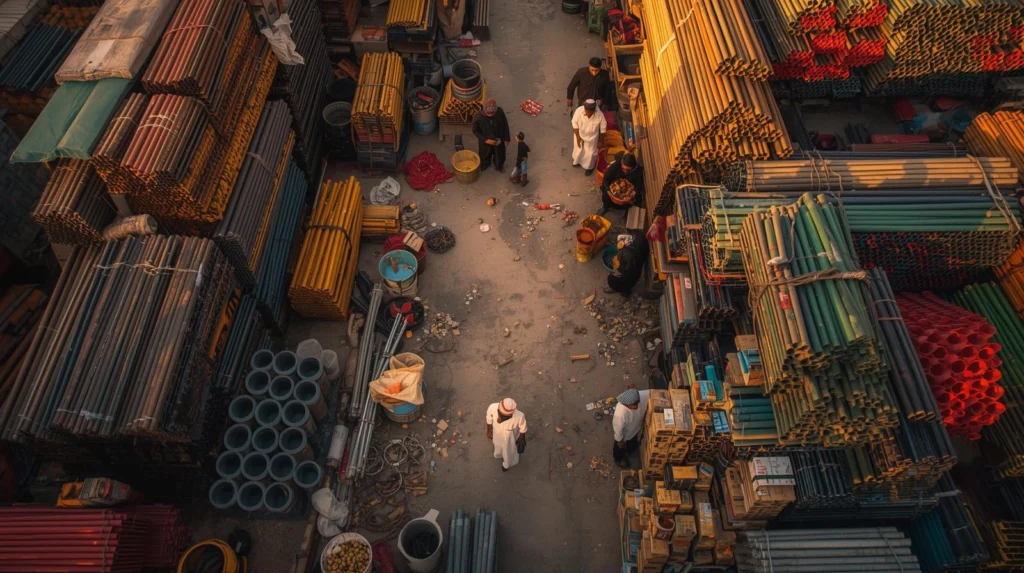
Growth of the Saudi Arabian PPR Pipes Market (2025-2034)
The Saudi Arabian PPR (Polypropylene Random Copolymer) pipes market is on an impressive growth trajectory. According to industry reports, the market size for PPR pipes in the country reached 24.48 KMT (Kiloton) in 2024. It is expected to expand at a compound annual growth rate (CAGR) of 4.40% from 2025 to 2034, eventually reaching 37.65 KMT by 2034. This growth can largely be attributed to Saudi Arabia’s large-scale infrastructure development initiatives under the Vision 2030 program.
Vision 2030 and Its Impact on the Construction Sector
Vision 2030 is a long-term development program aimed at diversifying Saudi Arabia’s economy and reducing its dependence on oil. One of the key areas of growth has been in construction and infrastructure development, where significant government investments have been made to create a modern, sustainable urban environment. This includes major projects like the Jeddah Waterfront, NEOM City, and the Entertainment City, which are expected to create a substantial demand for PPR pipes.
The growing demand for PPR pipes can be attributed to their numerous benefits, such as high mechanical strength, resistance to stray electrical currents, ease of workability, and low density. These advantages make them an ideal solution for plumbing, irrigation, and water distribution systems. Additionally, PPR pipes are increasingly being used in research facilities and chemical industries, owing to their high resistance to reactive chemicals.
Rising Demand for PPR Pipes in Various Sectors
In Saudi Arabia, PPR pipes are gaining popularity as the preferred choice for high-pressure cold and hot water plumbing and water supply systems. The market’s expansion is also being driven by the demand for building materials in line with the rapid growth of the construction sector, especially as public initiatives boost infrastructure development. The increasing need for efficient, corrosion-resistant piping systems that are also cost-effective is further contributing to the rise of PPR pipes in the region.
As the country is one of the largest producers and exporters of polymers and chemicals, there is a unique opportunity for PPR pipe manufacturers. The growing construction industry, backed by government initiatives, creates significant opportunities for manufacturers to cater to the domestic demand. Moreover, the government’s push for economic diversification, particularly after the decline in oil prices in 2014, is supporting these growth trends in the construction and building materials sector.
The Role of PPR Pipes in Saudi Arabia’s Economic Diversification
Since 2014, when global oil prices fell sharply, Saudi Arabia’s government has taken significant steps to diversify its economy away from a reliance on oil. As part of this strategy, the country has rolled out multiple large-scale infrastructure projects, which have created a favorable environment for industries involved in construction, including the PPR pipe market. With projects like NEOM City and the Jeddah Waterfront pushing forward, the demand for high-quality materials like PPR pipes has grown substantially.
PPR pipes play a crucial role in these developments, especially for their use in plumbing systems and electrical wiring. As part of the Vision 2030 initiative, the development of these infrastructure projects is expected to increase the demand for durable, cost-effective, and environmentally friendly construction materials like PPR pipes.
The increase in domestic demand has led manufacturers in Saudi Arabia to focus on expanding their production capacities. Moreover, to meet the surging demand, many manufacturers are also focusing on import substitution, ensuring that local production can adequately supply the growing market.
Key Players in the Saudi PPR Pipes Market
Several key players in the Saudi Arabian PPR pipes market are shaping its future. These companies have been focused on expanding their production capabilities to meet the growing demand from the construction sector. In recent years, several mergers, acquisitions, and plant expansions have occurred in the market, all aimed at increasing production capacity and improving efficiency.
In particular, the leading manufacturers of PPR pipes in Saudi Arabia are strategically focusing on research and development to enhance the performance and longevity of their products. By investing in advanced technology and infrastructure, these companies are well-positioned to meet the increasing demand for PPR pipes across the country’s various industries, including construction, chemical, and irrigation sectors.
Future Outlook of the Saudi Arabian PPR Pipes Market
The Saudi Arabian PPR pipes market is poised for significant growth between 2025 and 2034, driven by the expanding construction sector, favorable government policies, and the increasing adoption of PPR pipes in various industrial applications. The ongoing Vision 2030 initiatives will continue to drive the market forward as the government works to diversify the economy and build sustainable infrastructure for the future.
As demand increases for PPR pipes in Saudi Arabia’s plumbing and water distribution systems, along with growing industrial use in chemical research and manufacturing facilities, the market’s potential remains strong. Manufacturers are expected to capitalize on these trends by expanding production capacities and offering more durable, cost-efficient, and sustainable piping solutions.
To stay competitive, businesses in the market are likely to adopt innovative solutions, improve production efficiency, and explore new product lines to meet the evolving demands of various industries in Saudi Arabia.
Conclusion
The Saudi Arabian PPR pipes market is set for continued growth, driven by the ongoing development under Vision 2030 and the increasing demand for sustainable and efficient building materials. As the country moves towards greater economic diversification, the market for PPR pipes is expected to expand, providing manufacturers with numerous opportunities to capitalize on the demand for high-quality and durable piping systems.