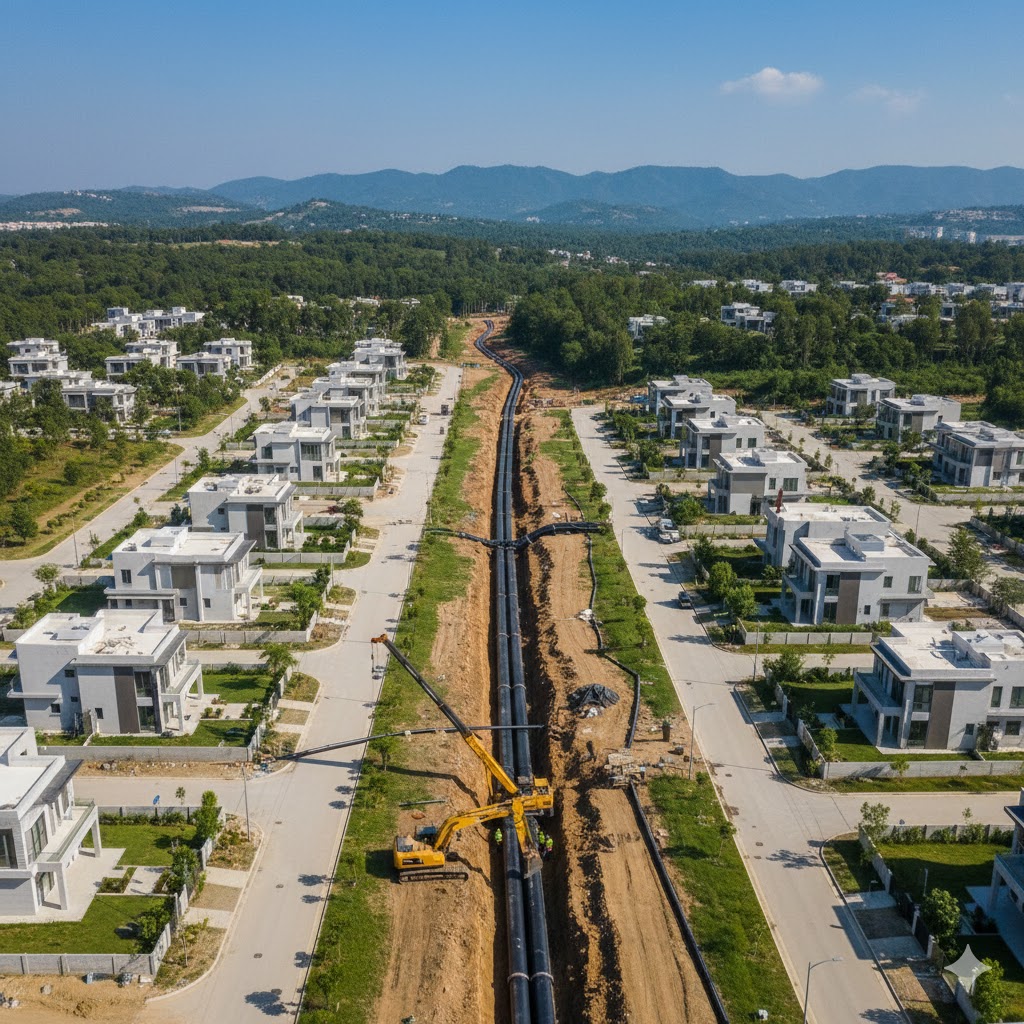
Have you ever experienced a sudden water shortage or poor water quality in your community? If you’re living in one of Islamabad’s growing residential societies, you may have noticed that reliable water supply is often a challenge. With population growth and urban development, ensuring a consistent and clean water supply becomes even more crucial. This is where the role of HDPE (High-Density Polyethylene) water pipelines comes into play.
For Islamabad’s societies, where infrastructural needs are constantly evolving, HDPE pipelines offer a long-lasting and cost-effective solution to water distribution problems. In this article, we will explore how these pipelines solve the key challenges facing water supply systems, helping ensure that residents have access to high-quality water without interruptions.
By the end of this guide, you will understand the benefits of HDPE pipelines, their role in modern water supply systems, and how they can be the perfect solution for Islamabad’s society development.
What Are HDPE Water Pipelines, and Why Are They Important?
What Makes HDPE Pipes Different from Other Materials?
HDPE water pipelines are made from high-density polyethylene, a durable, flexible plastic material known for its resistance to corrosion, chemicals, and wear. Unlike traditional materials such as cast iron, concrete, or PVC, HDPE pipes offer a much longer lifespan and are resistant to the elements, making them ideal for water distribution systems in areas like Islamabad.
The primary advantage of HDPE pipes lies in their robust resistance to environmental factors such as temperature fluctuations, UV radiation, and groundwater chemicals. These qualities make them especially beneficial for Islamabad’s societies, where the infrastructure often faces issues like frequent temperature changes and exposure to harsh chemicals in the water supply.
Real-world example: In 2020, the F-10 sector of Islamabad saw a significant improvement in its water supply system after replacing old iron pipes with HDPE pipes. The results were impressive—fewer leaks, better water pressure, and most importantly, water quality remained intact.
Key Benefits of HDPE Water Pipelines
HDPE pipelines are gaining popularity in water distribution projects due to their cost-efficiency, durability, and environmental benefits. Here are some compelling reasons why Islamabad societies are increasingly adopting HDPE water pipelines:
- Long Lifespan: HDPE pipes last up to 50-100 years with proper maintenance, significantly reducing replacement and maintenance costs.
- Resistance to Corrosion: Unlike metal pipes, HDPE does not rust or corrode, ensuring water remains clean and free of contaminants.
- Leak Prevention: HDPE’s seamless construction reduces the risk of water leakage, which is a common issue with traditional pipe materials.
- Environmental Safety: Being resistant to harsh chemicals, HDPE pipes are ideal for areas with contaminated groundwater or where water sources are chemically volatile.
Pro Tip: When selecting HDPE pipes, consider the SDR (Standard Dimension Ratio) rating. Higher SDR ratings mean thinner walls, while lower ratings ensure thicker walls for more strength, depending on your water pressure needs.
How Do HDPE Water Pipelines Improve Water Supply in Islamabad Societies?
Why Are HDPE Water Pipelines Crucial for Islamabad’s Growing Communities?
Islamabad, as the capital of Pakistan, is rapidly expanding. As more societies spring up around the city, water infrastructure must keep pace. Traditional pipe systems often struggle to meet the increasing demand, leading to issues like water shortages, leaks, and contamination.
By using HDPE water pipelines, Islamabad societies can create a more sustainable and reliable water supply system that can meet the demands of growing populations without compromising water quality. These pipelines ensure that water flows smoothly, even under pressure, and prevent problems such as leakage and blockage, which are often seen in older systems.
Case Study: The Impact of HDPE Pipes in Islamabad’s Sector E-11
In Sector E-11, one of Islamabad’s rapidly developing sectors, the local authorities decided to replace aging water pipelines with HDPE pipes. The area had long been plagued by water supply interruptions, as the old pipes were prone to bursts and corrosion. After the replacement with HDPE pipes, residents saw a marked improvement:
- Constant water supply: Interruptions were reduced by 80%, with fewer disruptions caused by pipeline issues.
- Cost savings: Maintenance costs dropped significantly as HDPE pipes required fewer repairs and replacements.
- Improved water quality: The risk of contamination was reduced, leading to cleaner drinking water for households.
The Sustainability Factor: How HDPE Contributes to a Greener Future
One of the often-overlooked benefits of HDPE pipes is their sustainability. HDPE is 100% recyclable, making it an eco-friendly choice for water infrastructure projects. This aligns with the growing trend of green urban planning in Islamabad, where developers are increasingly focused on creating environmentally conscious societies.
Moreover, the long lifespan of HDPE reduces the need for frequent replacements, conserving both resources and energy. This is particularly important as societies in Islamabad are looking for ways to minimize their environmental footprint while addressing water distribution challenges.
Expert Insight: “HDPE is often considered the most sustainable material for water pipelines,” says Ahmed Khan, a civil engineer specializing in water supply systems. “Its longevity and recyclability make it the ideal choice for forward-thinking societies in Islamabad.”
What Are the Challenges of Implementing HDPE Water Pipelines?
Are There Any Drawbacks to Using HDPE for Water Supply Systems?
Despite its numerous advantages, there are a few challenges associated with the use of HDPE water pipelines. One common concern is the initial installation cost. While HDPE pipes are more affordable in the long term due to reduced maintenance and longer lifespan, their upfront cost can be higher compared to other materials like PVC.
Another potential issue is installation complexity. HDPE pipes require specialized welding equipment for jointing, and the installation process requires skilled labor. Therefore, communities in Islamabad looking to implement HDPE pipelines need to partner with experienced contractors to ensure proper installation.
Pro Tip: Always conduct a thorough cost-benefit analysis before deciding on the material. While HDPE may have a higher initial cost, the long-term savings and durability often make it the best option in the long run.
How Can Islamabad Societies Overcome These Challenges?
To mitigate the installation costs, Islamabad societies can look for bulk purchasing options and government grants or subsidies aimed at improving urban infrastructure. Additionally, working with reputable contractors who have experience in installing HDPE pipelines will ensure that the system is installed efficiently and with minimal disruptions.
What Can Business Owners in Islamabad Do to Facilitate the Adoption of HDPE Pipelines?
How Can Builders and Developers Promote the Use of HDPE Pipes in New Developments?
Builders and developers in Islamabad have a critical role to play in the adoption of HDPE pipelines. By choosing HDPE for new construction projects, they can offer long-term benefits to buyers, reduce the maintenance burden, and enhance the reputation of their developments.
Additionally, business owners can collaborate with government officials and local water utility companies to ensure that HDPE pipes are part of the urban planning discussions for new societies. By promoting this sustainable option, developers can also attract environmentally conscious buyers who prioritize eco-friendly living.
Expert Insight: “As the demand for green and sustainable living grows, developers must make informed decisions about water infrastructure. HDPE pipelines offer both practical and environmental benefits, making them a smart choice for modern societies in Islamabad,” says Sana Ali, a leading environmental consultant in Pakistan.
Conclusion: The Future of Water Supply in Islamabad Societies
HDPE water pipelines offer a practical and cost-effective solution to the water supply challenges faced by Islamabad’s societies. By providing reliable, durable, and eco-friendly infrastructure, these pipelines can significantly improve the quality of life for residents. As Islamabad continues to grow, the adoption of HDPE pipelines will be key to ensuring that the city’s water supply can meet the needs of its expanding population.
If you’re involved in urban development, now is the time to consider the long-term benefits of HDPE water pipelines. Whether you’re a developer, business owner, or local authority, adopting HDPE pipes can make a lasting impact on Islamabad’s water supply system.
Next Steps:
- Research local suppliers of HDPE pipes for your project.
- Consult with an experienced contractor to understand installation requirements.
- Promote sustainable development by choosing HDPE pipes for your next water infrastructure project.
FAQ Section
What are the main advantages of HDPE water pipelines over traditional materials?
HDPE pipelines are highly resistant to corrosion, leakage, and environmental factors, offering a longer lifespan and lower maintenance costs compared to traditional materials like iron or PVC.
How long do HDPE pipes last?
HDPE water pipelines can last up to 50-100 years, depending on the environmental conditions and maintenance.
Are HDPE pipes more expensive than PVC pipes?
While the initial installation cost of HDPE pipes may be higher than PVC, their durability and low maintenance costs make them more cost-effective in the long run.
Can HDPE pipes handle high water pressure?
Yes, HDPE pipes are designed to handle high-pressure water flow, making them suitable for large-scale water supply systems in Islamabad societies.
Are HDPE pipes environmentally friendly?
Yes, HDPE pipes are 100% recyclable and have a long lifespan, reducing the need for frequent replacements and minimizing environmental impact.
What is the installation process for HDPE pipes?
The installation of HDPE pipes requires specialized welding equipment and skilled labor to ensure proper jointing and secure fittings.