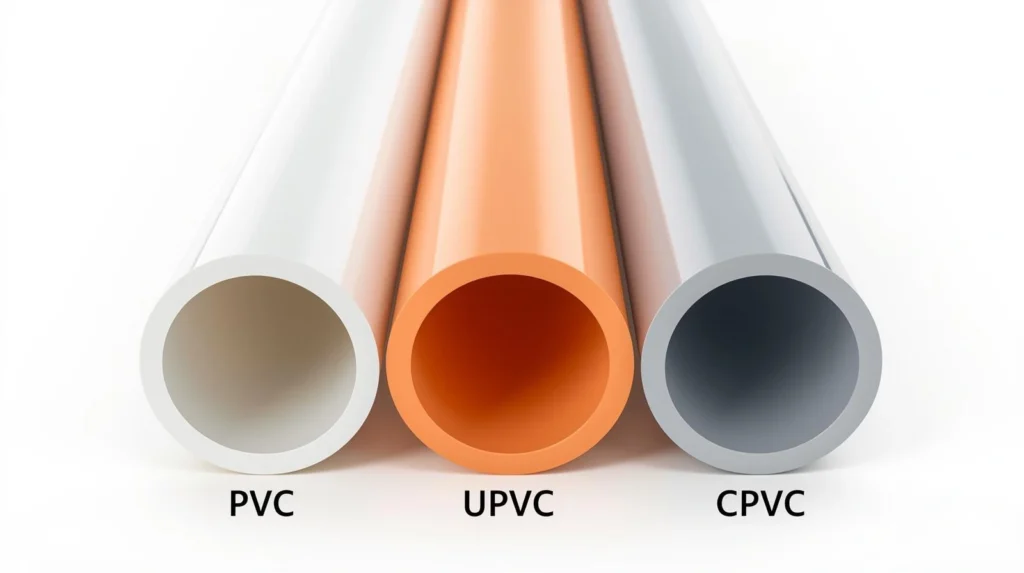
When it comes to choosing the right type of piping material for your project, the acronyms PVC, UPVC, and CPVC often come up, but what do they really mean, and more importantly, how do they differ from each other? Whether you’re building a house, plumbing a commercial space, or just curious about the options available, understanding the difference between PVC, UPVC, and CPVC is crucial.
Many people make the mistake of assuming that all plastic pipes are the same, but each one has unique properties and applications. In this post, we’ll break down what each of these pipe materials is, how they compare, and which one might be the best fit for your needs.
By the end of this guide, you’ll have a clear understanding of PVC, UPVC, and CPVC pipes and know how to make an informed decision for your next piping project.
What is PVC, and What Does it Mean?
PVC stands for Polyvinyl Chloride, and it’s one of the most commonly used plastic pipe materials globally. PVC pipes are known for their versatility, durability, and low cost, making them ideal for a variety of applications, from household plumbing to industrial uses.
Key Characteristics of PVC Pipes:
- Lightweight and Durable: PVC pipes are highly resistant to corrosion and rust, which makes them long-lasting in a variety of environments.
- Affordable: PVC is relatively inexpensive compared to other piping materials.
- Non-toxic: PVC is safe for transporting potable water.
However, PVC pipes are best used in cold-water systems, as they can become brittle and crack under high temperatures.
UPVC: What Does the “U” Stand For?
UPVC, or Unplasticized Polyvinyl Chloride, is similar to PVC, but without the plasticizing agents that make PVC more flexible. This key difference makes UPVC pipes more rigid and better suited for certain applications.
Key Characteristics of UPVC Pipes:
- Stronger and More Rigid: Because UPVC does not contain plasticizers, it is stronger and more rigid than regular PVC.
- No Softening Agent: The absence of plasticizers makes UPVC more resistant to degradation from sunlight and extreme temperatures.
- Ideal for Pressure Systems: UPVC pipes are often used in high-pressure systems like water supply pipes, sewage systems, and drainage pipes.
UPVC pipes are widely used for building and plumbing, particularly for water distribution systems.
CPVC: The “C” That Makes a Difference
CPVC stands for Chlorinated Polyvinyl Chloride, and the key difference between CPVC and PVC is the addition of chlorine during the manufacturing process. This gives CPVC higher resistance to heat and makes it more suitable for hot water applications.
Key Characteristics of CPVC Pipes:
- Heat Resistance: CPVC pipes can handle water temperatures up to 200°F (93°C), making them ideal for hot water systems.
- Chemical Resistance: CPVC is resistant to most chemicals, making it suitable for industrial uses where exposure to harsh substances is common.
- More Expensive than PVC/UPVC: Due to its heat resistance and additional chlorination, CPVC is more expensive than PVC or UPVC.
CPVC is often found in both residential and commercial plumbing systems where high-temperature water is involved, such as in hot water supply lines and industrial applications.
PVC vs UPVC vs CPVC: How Do They Compare?
Let’s now compare PVC, UPVC, and CPVC in terms of their features, uses, and durability.
| Property | PVC | UPVC | CPVC |
| Flexibility | Flexible | Rigid | Rigid |
| Heat Resistance | Low (up to 140°F) | Moderate (up to 140°F) | High (up to 200°F) |
| Pressure Resistance | Low to moderate | High | High |
| Applications | Drainage, electrical conduits | Water supply, drainage | Hot water pipes, industrial |
| Chemical Resistance | Low | High | High |
| Cost | Low | Moderate | High |
When to Use PVC, UPVC, or CPVC:
- PVC is best for low-pressure systems and cold-water applications, such as drainage pipes and electrical conduits.
- UPVC is ideal for rigid water supply systems and pressure systems where flexibility is not required.
- CPVC is the go-to option for hot water systems and industrial applications where heat and chemical resistance are required.
Expert Insights on Choosing the Right Pipe for Your Project
When deciding between PVC, UPVC, and CPVC, consider the temperature and pressure requirements of your system. If you are installing pipes for hot water, CPVC will be your best choice due to its heat resistance. However, for most cold-water systems, PVC or UPVC should suffice, with UPVC being the better choice for pressurized systems due to its rigidity.
Pro Tip:
If your project involves both cold and hot water lines, use CPVC for hot and UPVC for cold, as this will give you the best of both worlds without needing to replace your pipes later.
Common Mistakes to Avoid When Choosing Pipes
- Not Considering Temperature Resistance: Failing to choose the right pipe for the temperature of the water can lead to pipe failure. Always check the heat tolerance of the material before making a decision.
- Using PVC in Pressure Systems: PVC is not suitable for high-pressure systems, so opting for UPVC or CPVC when dealing with pressurized water can prevent future damage.
- Ignoring Chemical Resistance: In industrial or commercial applications, selecting the wrong type of pipe for chemical resistance can result in leaks or pipe degradation. Always opt for CPVC when handling corrosive materials.
Conclusion
In conclusion, PVC, UPVC, and CPVC each offer distinct advantages depending on your specific needs. PVC is great for light-duty applications like drainage, while UPVC is perfect for high-pressure cold-water systems. On the other hand, CPVC is the best choice for handling hot water and industrial systems where heat and chemical resistance are required.
When selecting the right pipe material for your project, consider the temperature, pressure, and chemical resistance requirements of your system. Doing so will ensure you make the most cost-effective and durable choice for your pipes.
Call to Action:
Now that you understand the differences between PVC, UPVC, and CPVC, it’s time to choose the right material for your next piping project. Whether you’re installing new pipes in a home, upgrading an industrial system, or dealing with plumbing in a commercial building, the right pipe can make all the difference.
FAQ Section
1. What is the difference between PVC and UPVC pipes?
PVC (Polyvinyl Chloride) is flexible, making it ideal for light-duty applications, while UPVC (Unplasticized PVC) is rigid, making it better for high-pressure systems.
2. Can CPVC be used for cold water pipes?
While CPVC is primarily designed for hot water systems, it can be used for cold water systems, but it is more expensive than PVC or UPVC.
3. Which is better for plumbing: PVC, UPVC, or CPVC?
For most plumbing systems, UPVC is the best choice due to its rigidity and resistance to pressure. However, CPVC is ideal for hot water systems.
4. Can PVC be used for both hot and cold water systems?
No, PVC is only suitable for cold water systems. For hot water systems, you should use CPVC, which is designed to handle higher temperatures.
5. Are PVC pipes safe for drinking water?
Yes, PVC pipes are safe for potable water, but they should be installed and maintained according to local regulations to ensure water safety.