Why Pipe Fittings Matter for Your Projects
When it comes to plumbing, construction, or industrial systems, the importance of pipe fittings cannot be overstated. These unsung heroes of the piping world help connect, control, and direct the flow of liquids and gases through pipelines. Whether you’re a seasoned engineer or a DIY enthusiast, understanding the different types of pipe fittings is crucial to ensuring that your systems run efficiently and safely.
This comprehensive guide will take you through the essential pipe fittings—elbows, tees, and reducers—explaining their functions, applications, and key considerations. By the end of this article, you’ll be able to make informed decisions about which fittings are best suited for your specific needs.
What Are Pipe Fittings?
Pipe fittings are components used to connect and control the flow of liquid or gas in a piping system. They come in various shapes and sizes, each designed to meet a specific need in the system’s function. From adjusting the direction of flow to reducing pipe size, these fittings play a critical role in ensuring that systems operate as intended.
Types of Pipe Fittings
Pipe fittings can be broadly classified based on their shape and functionality. The most common types include:
- Elbows
- Tees
- Reducers
1. What Are Elbow Fittings, and Why Are They Important?
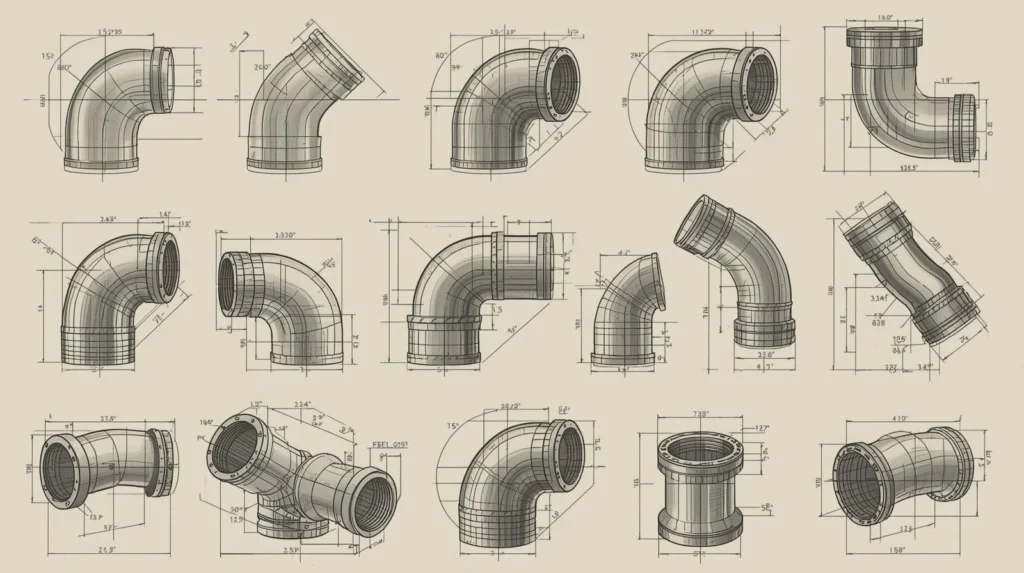
Elbow fittings are among the most commonly used pipe fittings. They allow for a change in direction within a piping system. Whether you’re dealing with residential plumbing or large industrial systems, elbows are essential for maneuvering around obstacles or fitting pipes into tight spaces.
Applications of Elbow Fittings
- Residential Plumbing: Elbow fittings are often used to reroute water pipes around corners and obstacles in homes.
- Industrial Systems: In industries such as oil and gas, elbow fittings help control the direction of pressurized pipelines, ensuring the system works efficiently.
There are two main types of elbows:
- 90-degree Elbows: These create a sharp turn, perfect for corners or tight spaces.
- 45-degree Elbows: These provide a more gradual bend, used when a less severe angle is required.
Pro Tip: Always consider the material compatibility and pressure rating when choosing elbows for your project. For example, a PVC elbow might not withstand the high-pressure conditions required in an industrial setup.
2. What Are Tees, and How Do They Work?
A tee fitting is used to create a branch in a pipeline. They connect three sections of pipe at a 90-degree angle, allowing fluid to flow in multiple directions. Tees are typically used when you need to split the flow or connect to a secondary pipeline.
Applications of Tees
- Water Supply Systems: In residential and commercial plumbing, tees help divide the flow of water to different fixtures like faucets, showers, and toilets.
- Industrial Systems: Tees can be used to route fluids into multiple pipelines, which is essential in manufacturing, chemical plants, and waste treatment facilities.
Tees come in different sizes and configurations, including:
- Equal Tee: All three ends have the same size.
- Reducing Tee: One end is smaller than the other two, used when connecting a smaller pipe to a larger one.
Pro Tip: When using tees in systems with high pressure or temperature variations, always choose a fitting material that can withstand these conditions, such as stainless steel.
3. What Are Reducers, and When Should You Use Them?
Reducers are pipe fittings that connect two pipes of different diameters. They are designed to either increase or decrease the flow of fluid by adjusting the pipe size accordingly. A reducer can help maintain optimal flow rates and system pressure.
Applications of Reducers
- Water Supply Lines: Reducing the pipe size ensures that water flows smoothly through different sections of the system, minimizing energy loss.
- Oil and Gas Pipelines: Reducers help maintain consistent pressure levels, especially in pipelines that transport substances at varying pressures.
There are two types of reducers:
- Concentric Reducer: The center of the smaller pipe is aligned with the center of the larger pipe.
- Eccentric Reducer: The center of the smaller pipe is offset from the larger pipe, ideal for draining systems.
Pro Tip: When choosing reducers for systems involving high-pressure fluids, make sure the material is suitable to prevent leaks or burst pipes.
4. Pipe Fitting Materials: Which One Is Right for Your System?
Selecting the right material for pipe fittings is just as important as choosing the correct type. The material you choose must be compatible with the fluids being transported, as well as the environmental conditions of the installation site.
Common materials include:
- PVC: Lightweight and corrosion-resistant, ideal for residential plumbing.
- Copper: Excellent for high-temperature systems and potable water.
- Stainless Steel: Strong and durable, often used in industrial applications.
- Carbon Steel: Resistant to corrosion and high pressure, typically used in heavy-duty systems.
Pro Tip: Always consult the manufacturer’s guidelines for pressure ratings and temperature limits for the specific material you plan to use.
5. How to Install Pipe Fittings: Step-by-Step Process
Proper installation is crucial to ensure that your piping system functions safely and efficiently. Here’s a general step-by-step guide for installing pipe fittings:
- Measure and Cut the Pipe: Ensure the pipe is cut to the required length using a pipe cutter or hacksaw.
- Clean the Pipe Ends: Remove any burrs or debris from the cut ends to ensure a smooth connection.
- Apply Sealant or Tape: Use pipe sealant or Teflon tape on the threads (if threaded fittings are used).
- Fit the Fitting: Insert the fitting into the pipe and tighten it securely using a wrench or other suitable tool.
- Check for Leaks: Turn on the water or gas supply and inspect the system for any leaks.
Expert Insight: When working with high-pressure or hazardous systems, always use professional-grade tools and consult with experts for installation.
6. Common Mistakes to Avoid When Using Pipe Fittings
While installing pipe fittings may seem straightforward, there are several common mistakes that can cause problems down the line.
- Using the Wrong Fitting: Using elbows instead of tees, or vice versa, can lead to improper flow and system malfunctions.
- Improper Sizing: Using undersized or oversized fittings can cause pressure drops, leaks, or inefficient fluid flow.
- Not Checking for Compatibility: Failing to check if the fitting material is compatible with the fluid type (e.g., corrosive chemicals) can lead to damage.
Pro Tip: Always double-check your measurements and material specifications before purchasing fittings for your project.
Conclusion: Master Pipe Fittings for Better Systems
Pipe fittings, including elbows, tees, and reducers, are essential components in building efficient and reliable piping systems. By understanding their functions, applications, and how to choose the right fitting, you can optimize the performance of your plumbing or industrial systems.
Before starting your next project, ensure that you have the right tools and materials to get the job done efficiently. If you’re unsure which fitting to use, don’t hesitate to consult with a professional for guidance.
FAQ Section
1. What is the difference between a tee and an elbow?
A tee is used to split the flow into multiple directions, while an elbow changes the direction of flow at a particular angle, typically 45 or 90 degrees.
2. Can pipe reducers be used for gas pipelines?
Yes, reducers are commonly used in gas pipelines to manage pressure and flow rate when transitioning between different pipe sizes.
3. What material is best for plumbing elbows?
For residential plumbing, PVC or copper elbows are commonly used. For commercial or industrial systems, stainless steel or carbon steel elbows are preferred for their durability and resistance to pressure.
4. Do pipe fittings affect water flow?
Yes, poorly installed or improperly sized pipe fittings can reduce water flow, cause pressure drops, and increase energy costs.
5. How do I prevent leaks in pipe fittings?
Ensure that all fittings are properly tightened, and use Teflon tape or pipe sealant on threaded connections. Regularly inspect for wear and tear, especially in high-pressure systems.