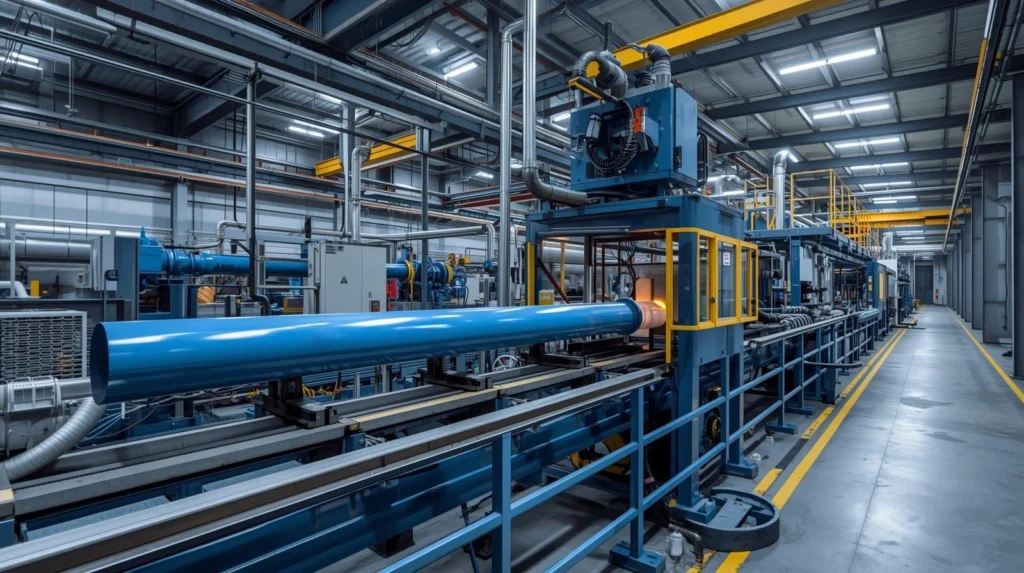
Have you ever wondered how plastic pipes, which are used in everything from household plumbing to large industrial applications, are made? In fact, the process behind producing these essential components is a fascinating blend of innovation and technology. Plastic pipe manufacturing has come a long way, especially with modern advancements in pipe extrusion technology.
In this blog, we’re going to take you on a virtual tour of a modern plastic pipe extrusion plant. You’ll discover the intricate steps behind the HDPE pipe production process, gain insights into how pipes are made, and understand why these materials are the go-to solution in many industries. Whether you’re an engineer, a business owner, or simply curious, you’ll come away with a clearer understanding of what goes into every pipe that runs through your walls.
What You Will Learn:
- The plastic pipe manufacturing process from start to finish
- The key stages of pipe extrusion and why it’s so effective
- How HDPE pipe production stands out in the industry
- Actionable insights on the latest technologies in the pipe-making process
1. What is the Pipe Extrusion Process?
The pipe extrusion process is the heart of modern plastic pipe manufacturing. This process involves melting raw plastic material and forcing it through a mold to form a continuous pipe. Think of it like squeezing toothpaste out of a tube, but on a massive scale and with far more precision.
The Key Stages:
Feeding the Raw Material:
It all begins with plastic resin, usually HDPE (High-Density Polyethylene) or PVC (Polyvinyl Chloride), that comes in pellets. These are fed into an extruder, which melts the resin using heat and pressure.
Extrusion:
The melted plastic is forced through a die—essentially a mold that shapes the pipe. The diameter and thickness of the pipe are controlled by the size of the die.
Cooling:
As the pipe exits the die, it is cooled using water or air. This helps solidify the pipe and stabilize its shape.
Cutting:
Once cooled, the continuous length of the pipe is cut into specific lengths, ready for use in construction or delivery to suppliers.
2. Why HDPE Pipes Are a Popular Choice
When it comes to plastic pipe manufacturing, HDPE pipes stand out due to their unique properties. HDPE is a thermoplastic material known for its durability, flexibility, and resistance to chemicals and environmental conditions.
Advantages of HDPE Pipes:
- Long-lasting: HDPE pipes can last for decades without rusting or corroding, unlike metal pipes.
- Flexible: Their flexibility makes them ideal for use in applications where pipes need to withstand pressure or movement.
- Eco-friendly: HDPE is 100% recyclable, making it an environmentally friendly choice.
- Cost-effective: Compared to traditional materials like metal, HDPE is generally cheaper and more lightweight.
3. The Role of Technology in Pipe Production
In modern extrusion plants, automation and computer-controlled systems play a major role in ensuring precision. These systems monitor and adjust various aspects of the manufacturing process, from the temperature of the melt to the speed at which the pipe is extruded. Here are some of the key technological innovations that are transforming the pipe manufacturing industry:
Technologies in Use:
- Advanced Extrusion Machines: Modern machines feature multiple screw extruders that increase the speed and efficiency of production.
- On-the-Fly Monitoring: Sensors constantly monitor the diameter, thickness, and temperature of the pipe, ensuring consistent quality.
- Robotic Cutting Systems: Automated cutting ensures that every pipe is of uniform length and ready for further processing or packaging.
- Laser Measurement Systems: These systems are used for inspecting the pipe’s wall thickness to ensure it meets quality standards.
4. The Impact of Pipe Extrusion on Industries
Plastic pipes, especially HDPE pipes, are vital in industries ranging from water supply and sewage management to telecommunications. The cost-effective, durable, and adaptable nature of these pipes makes them ideal for a variety of applications.
Real-World Applications:
- Water Supply: HDPE pipes are widely used in municipal water systems because they are resistant to corrosion, which ensures long-term performance.
- Gas Transport: HDPE pipes are also used for transporting natural gas, as they are able to withstand high pressures.
- Agriculture: Farmers use HDPE pipes for irrigation systems due to their flexibility and low maintenance needs.
- Telecommunications: These pipes serve as protective casings for cables laid underground.
5. Common Mistakes in Pipe Production and How to Avoid Them
While the process may seem straightforward, plastic pipe manufacturing can be prone to issues if not properly managed. From defects in the pipe’s structure to inefficiencies in production, these mistakes can affect the final product’s quality and cost-effectiveness.
Mistakes to Avoid:
- Incorrect Material Handling: Not storing the plastic resin properly can lead to contamination and weakened pipes.
- Inconsistent Temperature Control: Fluctuating temperatures during extrusion can result in uneven pipe thickness or weak spots.
- Failure to Test Pipe Integrity: Pipes should undergo rigorous testing for pressure, strength, and durability. Skipping this step can lead to failures in the field.
Pro Tip:
Always ensure that your extrusion plant is equipped with proper testing facilities, including hydrostatic testing to measure pressure resistance and visual inspection systems for defects.
6. The Future of Pipe Extrusion: What’s Next?
The future of plastic pipe manufacturing looks exciting, with new technologies on the horizon. 3D printing, smart sensors, and robotic automation are all expected to play a bigger role in the production of pipes.
Upcoming Innovations:
- Smart Pipes: With the integration of sensors, pipes will soon be able to monitor their condition in real time, sending alerts for maintenance or replacements.
- Recycled Materials: The use of recycled plastics in pipe production is becoming more common, which will lower costs and reduce environmental impact.
- Sustainable Production: With the focus on sustainability, plants will adopt green technologies, reducing energy consumption and waste production.
Conclusion
The plastic pipe manufacturing process is a remarkable fusion of science, technology, and practicality. From the extrusion of HDPE pipes to the integration of advanced monitoring systems, modern plants ensure high-quality, durable pipes that are essential to infrastructure development worldwide.
Whether you’re a business owner, a contractor, or just curious about how pipes are made, this virtual tour of the manufacturing process gives you an in-depth look at how these essential components are created. With the rise of new technologies and sustainable practices, the future of pipe extrusion is brighter than ever.
FAQ Section
1. What are HDPE pipes made of?
HDPE pipes are made from high-density polyethylene, a durable and flexible thermoplastic material that is resistant to chemicals and environmental damage.
2. How long do HDPE pipes last?
HDPE pipes can last for 50 to 100 years when installed and maintained correctly, making them a long-lasting choice for water and gas transport.
3. What industries use plastic pipes?
Plastic pipes are used in industries such as municipal water systems, gas transportation, telecommunications, and agriculture.
4. What is the pipe extrusion process?
The pipe extrusion process involves melting plastic resin and forcing it through a mold (die) to form a pipe. The pipe is then cooled, cut to size, and tested for quality.
5. How are defects in plastic pipes detected?
Defects are detected through visual inspections, laser measurement systems, and hydrostatic testing to ensure that the pipes meet quality standards before being shipped.
6. What makes HDPE pipes better than PVC?
HDPE pipes are more flexible, corrosion-resistant, and cost-effective compared to PVC, making them ideal for applications like water supply and gas transportation.
7. Can plastic pipes be recycled?
Yes, plastic pipes, especially HDPE, are 100% recyclable, making them an environmentally friendly option for pipe manufacturing.