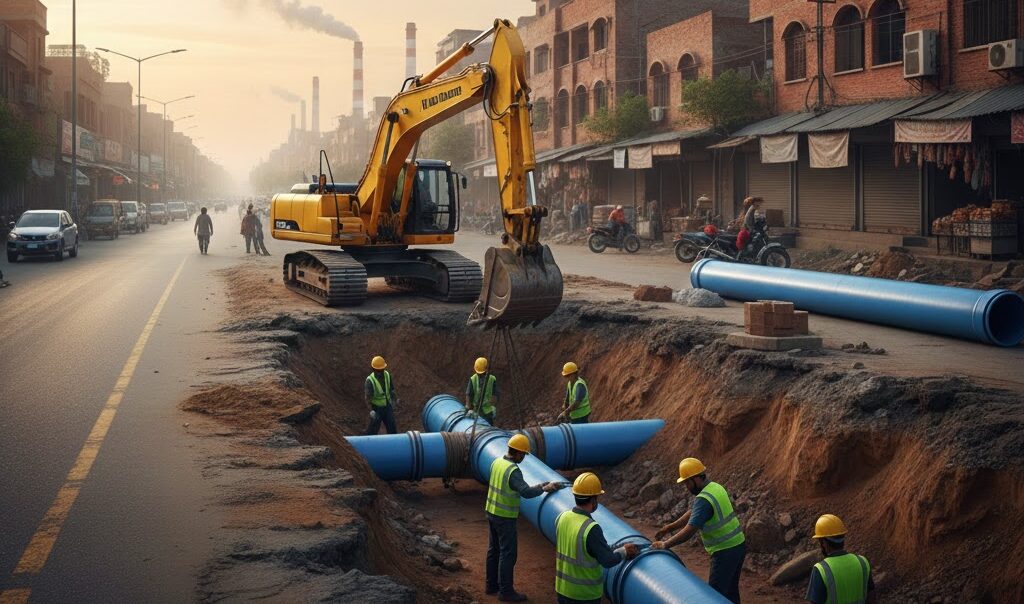
How do cities like Gujranwala tackle one of the most pressing urban challenges: wastewater management? Wastewater treatment and proper pipe installation are pivotal in ensuring the health, safety, and sustainability of any city. In a rapidly growing urban environment, failing to address wastewater issues can lead to serious environmental and health problems. Gujranwala, one of Pakistan’s major industrial hubs, faces these challenges head-on, striving to improve its municipal wastewater systems.
In this blog, we’ll explore how Gujranwala and similar cities are addressing wastewater management through effective municipal wastewater pipe installations. By examining the latest techniques, technologies, and real-world examples, you’ll gain a deeper understanding of how municipalities can approach these crucial infrastructure projects with efficiency and long-term benefits. Whether you’re a city planner, contractor, or business owner, this article will provide actionable insights to tackle wastewater pipe installation challenges effectively.
1. Why Are Municipal Wastewater Pipes Crucial for Cities?
The Role of Municipal Wastewater Pipes in Urban Infrastructure
Municipal wastewater pipes form the backbone of a city’s sanitation infrastructure. They are responsible for collecting and transporting sewage, stormwater, and industrial effluents to treatment facilities. Without a robust and well-maintained network of wastewater pipes, cities would face the risk of pollution, public health crises, and environmental damage.
Take, for example, Gujranwala’s expanding urban population. As the city grows, so does the demand for an efficient wastewater management system. Proper pipe installation ensures that wastewater is effectively transported to treatment plants, reducing the risks of contamination in water bodies, land, and the air. Moreover, well-designed pipes can significantly reduce the chances of blockages and leaks, which can lead to costly repairs and dangerous environmental impacts.
Pro Tip: Ensuring that wastewater pipes are built with high-quality materials and are regularly maintained can save cities millions in repair and replacement costs.
2. What Challenges Do Cities Face in Installing Municipal Wastewater Pipes?
Common Obstacles in Municipal Wastewater Pipe Installations
Municipalities like Gujranwala often encounter several challenges during wastewater pipe installation projects. These challenges can delay projects, increase costs, and compromise the effectiveness of the entire system.
- Budget Constraints: Wastewater management systems are expensive to build and maintain, and many municipalities operate on tight budgets. Balancing the need for high-quality infrastructure with available financial resources is a major challenge.
- Aging Infrastructure: Many cities rely on outdated sewage systems that were built decades ago. These systems often require significant upgrades or complete replacements, which can be both costly and time-consuming.
- Environmental Concerns: Installing new wastewater pipes without causing damage to existing ecosystems is a critical concern. Projects that fail to consider the environment can lead to soil erosion, water contamination, and public opposition.
- Technological Limitations: In some cases, cities lack the technology and expertise required for efficient and cost-effective installation. Advanced techniques like trenchless technology or smart wastewater pipes may not be available due to high costs or lack of trained professionals.
Example: In 2020, Gujranwala faced delays in implementing new wastewater projects due to the complexity of managing its old pipe systems while installing newer, larger pipelines to cater to its expanding population.
Pro Tip: Early planning, stakeholder collaboration, and the use of modern technology can mitigate many of these challenges and help cities like Gujranwala overcome the hurdles of wastewater infrastructure development.
3. How Do Advanced Installation Techniques Improve Wastewater Pipe Systems?
Modern Solutions for Efficient Wastewater Pipe Installation
The traditional methods of laying down wastewater pipes—such as digging trenches and manual labor—are time-consuming, disruptive, and costly. Fortunately, innovative installation techniques have made the process faster, cleaner, and more efficient.
- Trenchless Technology: This method allows for the installation of wastewater pipes without digging up large sections of ground. It involves using specialized equipment like horizontal directional drilling (HDD) or microtunneling to place pipes underground with minimal disruption to existing infrastructure. This is particularly useful in areas where excavation is impractical or costly, such as densely populated neighborhoods.
- Smart Wastewater Pipes: Smart pipes incorporate sensors that monitor factors like flow rate, pressure, and potential leaks. These sensors can transmit real-time data, allowing municipalities to take preventative measures before issues arise. Cities like Gujranwala, which are rapidly urbanizing, can greatly benefit from this technology by ensuring the pipes are functioning efficiently and any problems are detected early.
- Prefabricated Pipes: Using prefabricated pipes instead of traditional concrete or PVC pipes can save both time and money. These pipes are produced in a factory under controlled conditions, ensuring consistency in quality and reducing installation time.
Pro Tip: Combining trenchless technology with smart wastewater pipes can dramatically reduce the overall cost of installation while increasing the lifespan and efficiency of the entire system.
4. What Are the Best Practices for Designing and Installing Wastewater Pipe Systems?
Key Considerations for Efficient and Sustainable Systems
The design and installation of municipal wastewater systems are not one-size-fits-all. Cities like Gujranwala must tailor their approach to the specific needs of their population, geography, and environmental factors. Here are some best practices to follow:
- Conduct a Comprehensive Survey: Before starting any installation, it’s essential to understand the existing infrastructure, soil types, and environmental factors. A detailed survey helps in selecting the right materials and installation techniques, minimizing future disruptions.
- Use High-Quality Materials: The longevity and efficiency of the wastewater system depend largely on the materials used. Corrosion-resistant pipes made from materials like HDPE (High-Density Polyethylene) or PVC ensure durability even in harsh conditions.
- Optimize Pipe Sizing: Properly sizing the pipes based on the population size and wastewater load is crucial. Overestimating or underestimating pipe capacity can lead to blockages or overflow issues, which can create public health risks.
- Ensure Easy Access for Maintenance: While the primary goal is to install the pipes, the secondary goal is to ensure that they are easily maintainable. The system should allow for quick repairs and replacements when needed, without disrupting daily activities.
- Incorporate Future-Proofing: As cities expand, wastewater systems must be scalable. Planning for future growth by installing larger pipes or leaving space for new connections can save municipalities from costly upgrades down the road.
Example: In the city of Lahore, similar projects have successfully integrated smart monitoring systems and flexible pipe materials, significantly improving their wastewater management and reducing maintenance costs over time.
5. How Does Gujranwala Benefit from Effective Municipal Wastewater Pipe Installations?
Real-World Example: Gujranwala’s Approach to Wastewater Management
Gujranwala, known for its industrial base, faces unique challenges in wastewater management. The city has seen significant growth in recent years, leading to an increase in wastewater production. To cope with this, Gujranwala has embarked on a series of projects to upgrade its wastewater infrastructure.
In one project, the city installed a new network of HDPE pipes to replace old, corroded ones. This upgrade improved the efficiency of wastewater transportation and reduced leakage. The municipality also adopted trenchless technology for urban areas, minimizing disruption to daily life and ensuring smoother installations.
Additionally, Gujranwala has incorporated real-time monitoring systems in some parts of the city, allowing engineers to track the performance of the pipes and detect issues such as blockages or leaks before they become major problems.
Pro Tip: Incorporating real-time monitoring in Gujranwala’s wastewater infrastructure not only prevents failures but also allows for predictive maintenance, reducing long-term costs and environmental impact.
6. What Is the Future of Municipal Wastewater Pipe Installations?
Trends Shaping the Future of Wastewater Infrastructure
The future of municipal wastewater pipe installations is set to evolve with new technologies and more sustainable practices. Here are a few key trends to watch:
- Green Infrastructure: Cities are increasingly integrating green infrastructure solutions, such as permeable pavements and natural water retention systems, to reduce the strain on traditional wastewater pipes.
- Circular Economy Practices: There’s a growing trend of reusing treated wastewater for non-potable purposes like irrigation or industrial processes. This reduces the overall demand for freshwater and creates more sustainable cities.
- Smart Cities and IoT Integration: The Internet of Things (IoT) is making wastewater systems smarter. From automated cleaning schedules to predictive leak detection, IoT devices will continue to make wastewater infrastructure more efficient.
Conclusion
Municipal wastewater pipe installations are a critical part of a city’s growth and sustainability. In cities like Gujranwala, effective pipe installations not only ensure a cleaner environment but also improve public health and reduce the cost of long-term repairs. By leveraging modern technologies, high-quality materials, and best practices, municipalities can overcome challenges and ensure the continued success of their wastewater systems.
Ready to take your city’s wastewater management to the next level? Start by evaluating your current system, exploring modern installation methods, and considering sustainable, future-proof solutions for your infrastructure.
FAQ Section
- Why is wastewater pipe installation important for cities?
Wastewater pipe systems are essential for the safe and efficient transport of sewage and wastewater to treatment facilities, preventing pollution and protecting public health. - What are the most common problems in wastewater pipe installations?
Budget constraints, aging infrastructure, and environmental concerns are some of the common challenges faced during wastewater pipe installations. - What is trenchless technology?
Trenchless technology involves installing pipes without digging large trenches, reducing disruption and excavation costs. It’s ideal for urban areas where space is limited. - How do smart wastewater pipes work?
Smart pipes are equipped with sensors that monitor factors like flow and pressure. This data is transmitted in real time to help detect issues such as leaks or blockages before they escalate. - What materials are best for wastewater pipes?
HDPE (High-Density Polyethylene) and PVC are commonly used materials due to their durability and resistance to corrosion, ensuring a long lifespan. - How can cities like Gujranwala improve their wastewater systems?
By adopting modern technologies like trenchless installations, real-time monitoring, and high-quality materials, Gujranwala can enhance the efficiency and sustainability of its wastewater systems. - What is the future of wastewater management?
The future includes green infrastructure, smart city integration, and circular economy practices that will make wastewater systems more sustainable and efficient.